Table of Contents
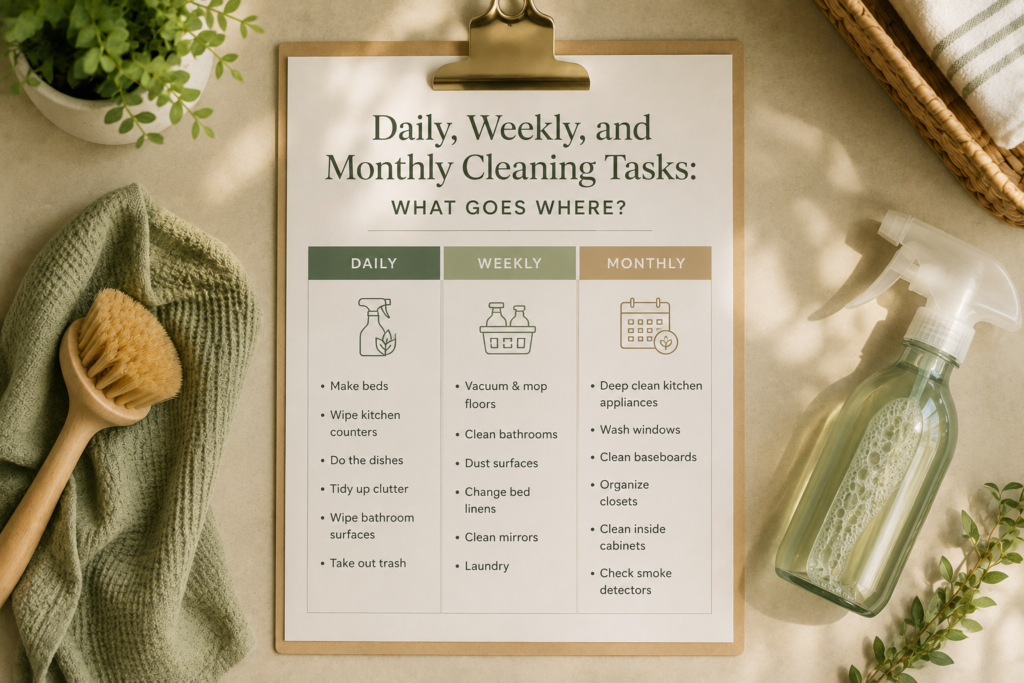
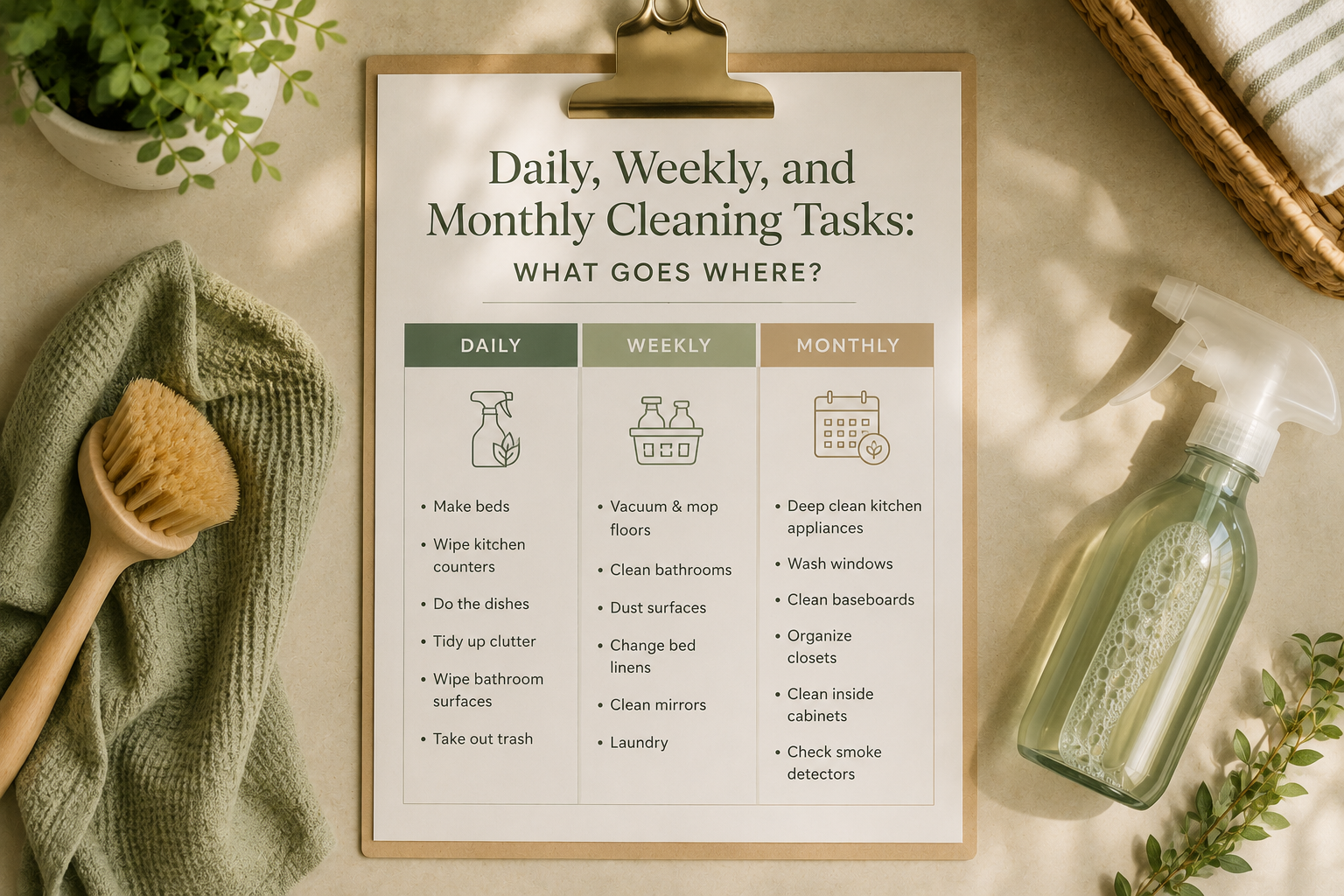
Quick answer: daily cleaning tasks are the ones that prevent buildup (dishes, wiping counters, making the bed), weekly tasks maintain what daily upkeep can’t reach (vacuuming, bathrooms, mopping), and monthly tasks handle things that only need occasional attention (baseboards, light fixtures, deep dusting). The split isn’t arbitrary — it’s based on how fast grime actually accumulates on each surface. Below is the full breakdown of what goes where, and why mixing up the categories is what makes cleaning schedules fall apart.
Why Sorting Cleaning Tasks by Frequency Actually Matters
Most cleaning schedules fail not because people are lazy, but because the schedule itself asks for the wrong frequency. Vacuuming a high-traffic living room daily is overkill that nobody sustains; vacuuming it monthly lets dirt grind into the carpet fibers. The right frequency depends entirely on how fast a task’s “undone” state becomes a real problem — dishes pile up in a day, but baseboards collecting dust takes weeks to actually look bad.
Getting this split right means every task on your list has a frequency that matches its actual urgency, which is the difference between a schedule you keep and one you abandon by week three.
Daily Cleaning Tasks

Daily tasks are the ones where skipping even one day creates a visible, immediate problem. These take five to fifteen minutes total and prevent everything else from snowballing:
- Wipe down kitchen counters after cooking. Food residue left overnight attracts pests and hardens into something that needs scrubbing instead of wiping.
- Do dishes or load the dishwasher. A sink left full overnight is the single biggest contributor to a kitchen feeling “behind” the next morning.
- Make the bed. It takes under two minutes and changes how the entire bedroom reads, even if nothing else gets done that day.
- Wipe the bathroom sink and counter. Toothpaste splatter and soap residue harden fast; a daily wipe prevents the kind of buildup that needs scrubbing later.
- Sweep high-traffic floor areas. Entryways and kitchens collect grit daily — a quick sweep stops it from getting ground in.
- Take out the kitchen trash if it’s full. Not on a fixed schedule, but checked daily so it never overflows.
Weekly Cleaning Tasks

Weekly tasks handle the buildup daily tasks can’t catch. These take 45 minutes to two hours depending on home size, and they’re where most of an actual cleaning routine lives:
- Vacuum all floors and rugs. Dust and pet hair build up gradually enough that daily vacuuming is unnecessary, but a full week without it shows.
- Mop hard floors. Pairs naturally with vacuuming — do this right after so you’re not walking dirt back onto a clean floor.
- Clean the full bathroom. Toilet, shower, and tub need a real scrub weekly even with daily sink wipe-downs in place. See our full bathroom deep clean checklist for the exact order that prevents re-spreading grime.
- Change bed sheets. Weekly is the standard recommendation for hygiene, though every-other-week works fine for guest rooms or low-use spaces.
- Wipe down kitchen appliance exteriors. Fridge doors, microwave exterior, and stovetop accumulate fingerprints and splatter that a daily wipe misses.
- Empty all wastebaskets, not just the kitchen. Bathroom and bedroom bins get forgotten far longer than they should.
Monthly Cleaning Tasks
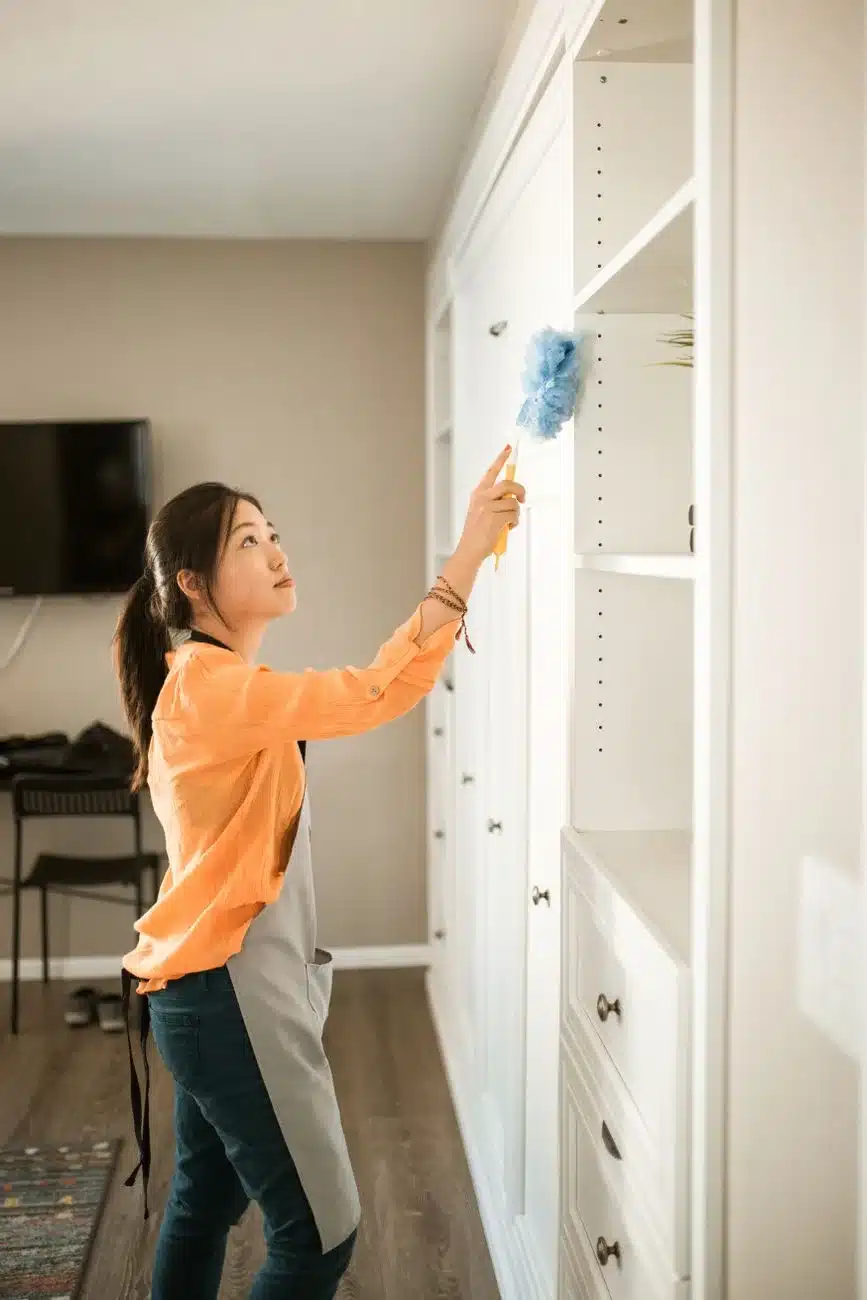
Monthly tasks are the ones that build up slowly enough that doing them weekly would be wasted effort, but skipping them for months lets real grime set in:
- Dust baseboards, shelves, and light fixtures. These collect dust at a pace that’s invisible week to week but obvious after a month.
- Clean inside the microwave and oven. Splatter inside these accumulates slowly enough that monthly is sufficient for most households.
- Wash windows and mirrors thoroughly. Streaks and fingerprints build gradually; a monthly pass keeps them from becoming a genuinely dirty surface.
- Vacuum upholstery and under furniture. Areas a regular vacuum pass skips need their own monthly attention.
- Clean out the refrigerator. Checking expiration dates and wiping shelves monthly prevents the kind of cleanout that takes an entire afternoon.
- Wash or vacuum curtains and blinds. These trap dust at a slow enough rate that monthly attention is genuinely sufficient.
How to Actually Stick to This Split
The split only works if it’s visible somewhere other than your memory. Assign daily tasks to a specific time of day (after dinner works for most kitchens), pick one consistent day each week for the weekly list, and choose a recurring date each month — the first Saturday, for example — for the monthly tasks. Tasks without an assigned slot get skipped the first time you’re tired, and skipped tasks compound fast.
Mistakes That Blur the Lines Between Categories
- Treating weekly tasks as daily “just in case.” Vacuuming daily when weekly is sufficient burns time and motivation you’ll need for tasks that actually require daily attention.
- Letting monthly tasks slide to “someday.” Without an assigned date, monthly tasks are the easiest to indefinitely postpone — they need a specific day, not a vague intention.
- Trying to do everything on the same day. Spreading weekly tasks across two or three days, rather than one marathon session, is far more sustainable long-term.
- Skipping daily tasks because “I’ll catch up this weekend.” Daily tasks exist specifically because waiting compounds the mess — catching up never actually takes the same amount of time as staying current would have.
Real Talk:
I spent years trying to do a full “clean the whole house” day every Sunday, and I’d burn out by hour three and leave half the list undone. The fix wasn’t more discipline — it was realizing most of what I was cramming into Sunday didn’t need to happen weekly at all. Once I moved baseboards and light fixtures to a monthly list, my actual weekly cleaning dropped to ninety minutes, and I finally stopped dreading it.
Once you’ve got the daily, weekly, and monthly split working, our free weekly cleaning schedule generator can turn this exact breakdown into a printable, room-by-room list for your household.
According to Martha Stewart’s house cleaning schedule guidance, breaking tasks into daily, weekly, and monthly tiers based on how quickly each one becomes noticeable is the most sustainable approach for most households, which lines up with the frequency logic above.
Frequently Asked Questions
What cleaning tasks should be done daily?
Wiping kitchen counters, doing dishes, making the bed, wiping the bathroom sink, and sweeping high-traffic floor areas. These prevent the kind of buildup that turns into a bigger job later.
What cleaning tasks should be done weekly?
Vacuuming and mopping all floors, a full bathroom clean, changing bed sheets, wiping appliance exteriors, and emptying all wastebaskets. These maintain what daily tasks alone can’t catch.
What cleaning tasks only need to be done monthly?
Dusting baseboards and light fixtures, cleaning inside the microwave and oven, washing windows, vacuuming upholstery, and cleaning out the refrigerator. These build up slowly enough that weekly attention would be excessive.
How do I stick to a daily, weekly, and monthly cleaning schedule?
Assign each tier a fixed time slot: a specific moment each day, one consistent day each week, and a recurring date each month. Tasks without an assigned slot are the ones most likely to get skipped.