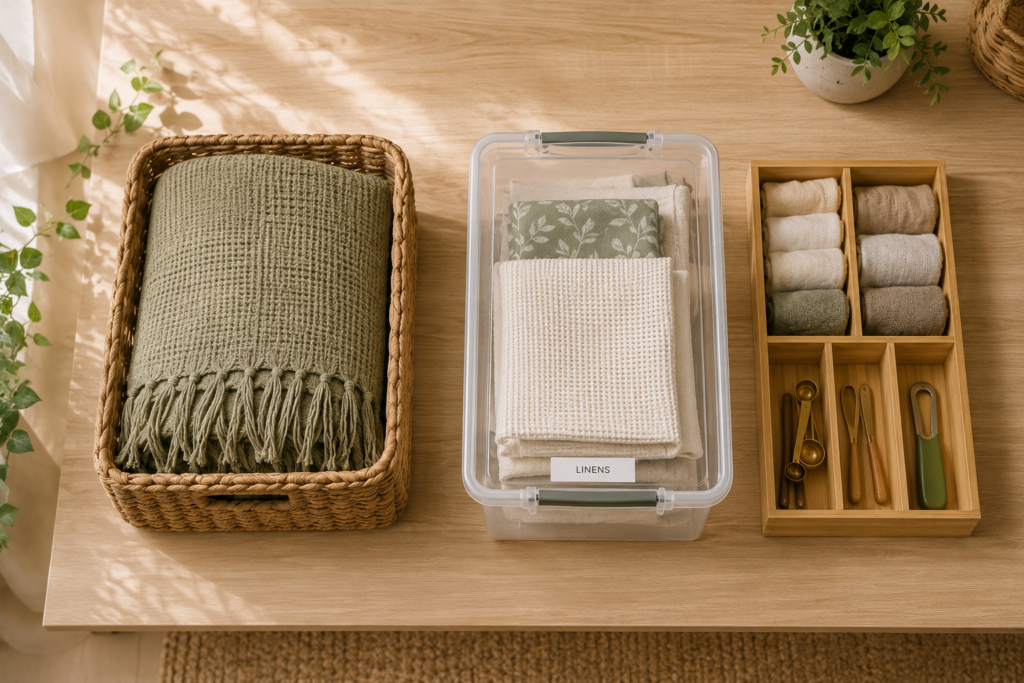
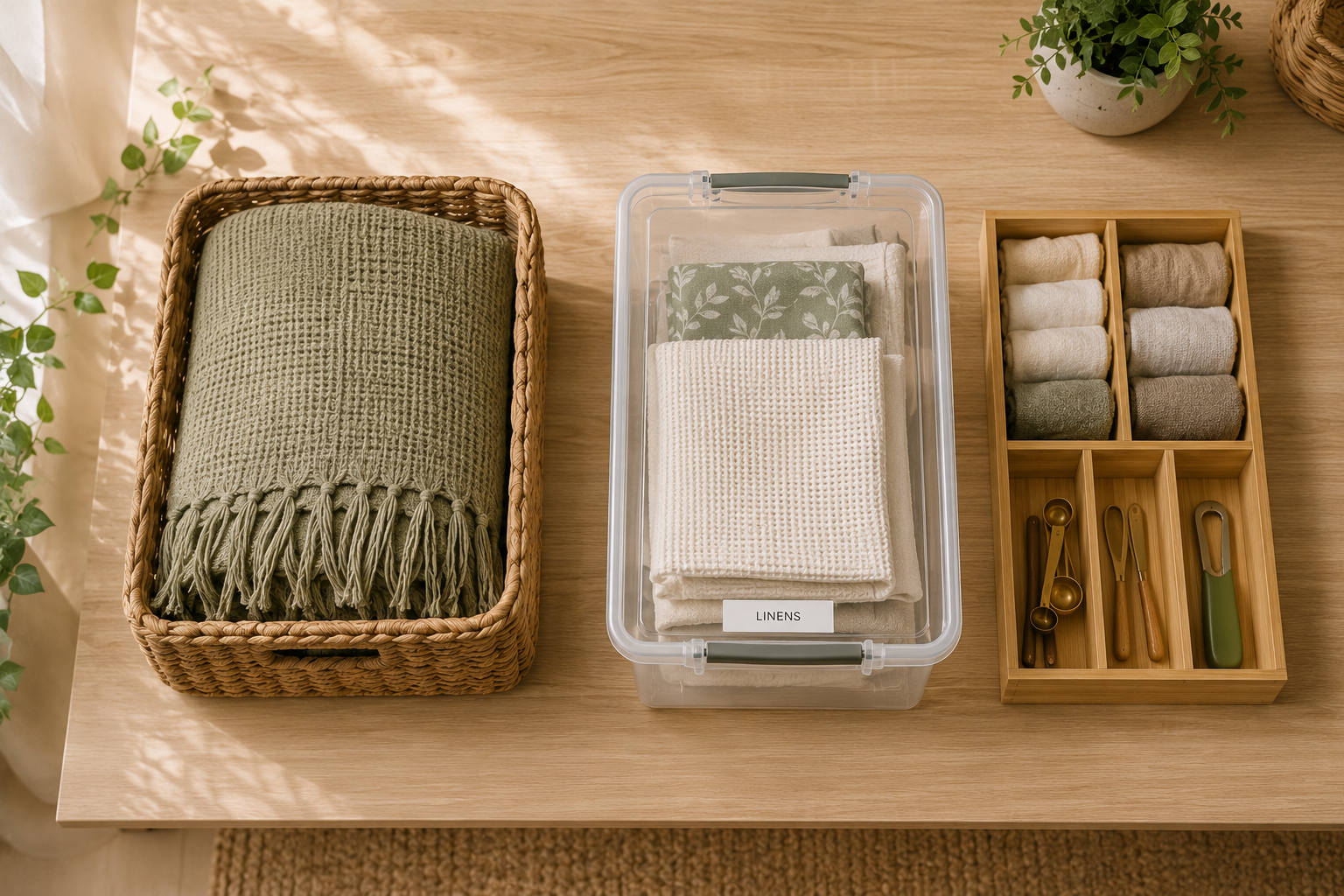
The quick answer: baskets are best for open shelving and grab-and-go items, bins win for anything you need to label and stack, and drawer dividers solve a completely different problem — keeping small items from sliding around inside a drawer. Most people buy all three and use none of them correctly. Here’s how to actually match the container to the space.
The Quick Comparison
| Container | Best For | Avoid When |
|---|---|---|
| Baskets | Open shelving, throws, shoes by the door, toys you grab daily | You need to see contents at a glance or store small parts |
| Bins | Pantry shelves, closet storage, garage, anything labeled | Space is tight or the look needs to feel soft, not utilitarian |
| Drawer Dividers | Kitchen drawers, desk drawers, bathroom vanity, dresser drawers | You’re organizing open shelving or bulk storage, not a drawer |
When Baskets Are Actually the Right Call
Baskets work best when you want something to look intentional, not just contained. Open shelving, a reading nook, the bottom of a closet — baskets soften the look of storage instead of making it feel like a warehouse. They’re also genuinely better for things you grab constantly: a basket of throw blankets gets used way more than a labeled bin would, because there’s zero friction between “I want this” and “I have this.”
The tradeoff: you can’t see inside most fabric baskets, and small items get jumbled together fast. If you’ve ever dumped a basket out looking for one specific thing, you already know the limit.
When Bins Win, No Contest
Bins — especially clear ones — solve the exact problem baskets create. You can see what’s inside, they stack cleanly, and they take a label without looking messy. This is why bins dominate pantries, garages, and closet shelving: anywhere you need to find something specific without digging.
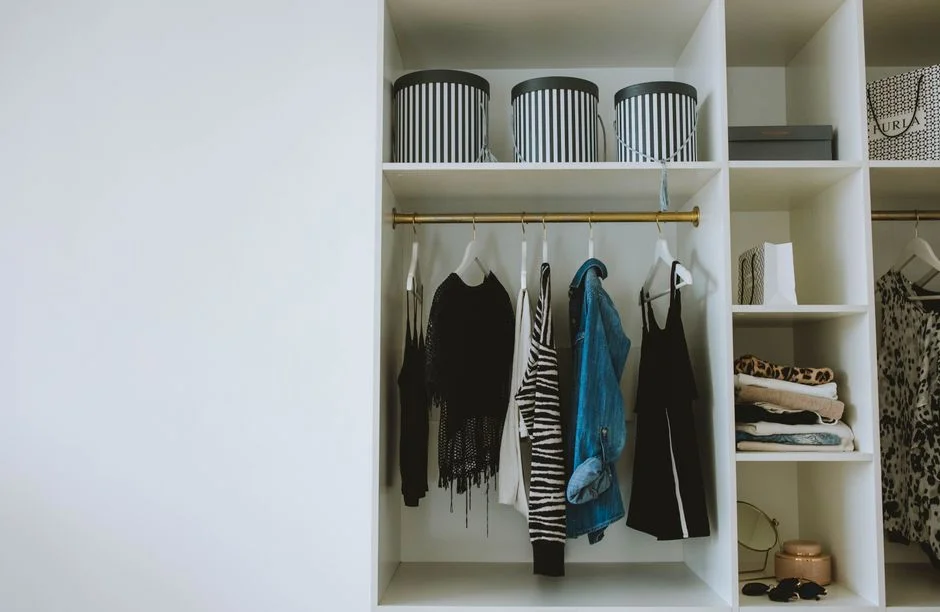
The downside is aesthetic. Bins read as “storage,” not “decor.” If you’ve spent time making a space feel cozy, swapping in a wall of plastic bins can undercut that — which is exactly why so many people use a hybrid approach (bins on high shelves where function matters most, baskets at eye level where look matters more).
Drawer Dividers Solve a Different Problem Entirely
Here’s the thing people get wrong: drawer dividers aren’t a smaller version of a bin. They solve drawer-specific chaos — utensils sliding into one pile, sock drawers turning into a tangle, bathroom drawers where everything migrates to one corner every time you open it. Bins and baskets don’t fit this problem because the issue isn’t storage capacity, it’s containment within a shallow, frequently-opened space.
If your kitchen drawers are the actual mess (not your cabinets), dividers — not bins — are the fix.
Real Talk:
I bought twelve matching bins for my pantry before I’d ever organized a single shelf, because they looked good in a photo. Half of them sat empty in the garage for a year. Figure out what you’re actually storing and how often you touch it — then buy the container, not the other way around.
A Simple Way to Decide
- Ask how often you’ll touch it. Daily-use items want baskets (low friction). Occasional-use items can handle bins (slightly more effort to open/close).
- Ask if you need to see inside. If yes, go clear bins. If it doesn’t matter, baskets are usually cheaper and nicer to look at.
- Ask if it’s a drawer problem. If the mess is happening inside a drawer, skip bins and baskets entirely — dividers are the only real fix.
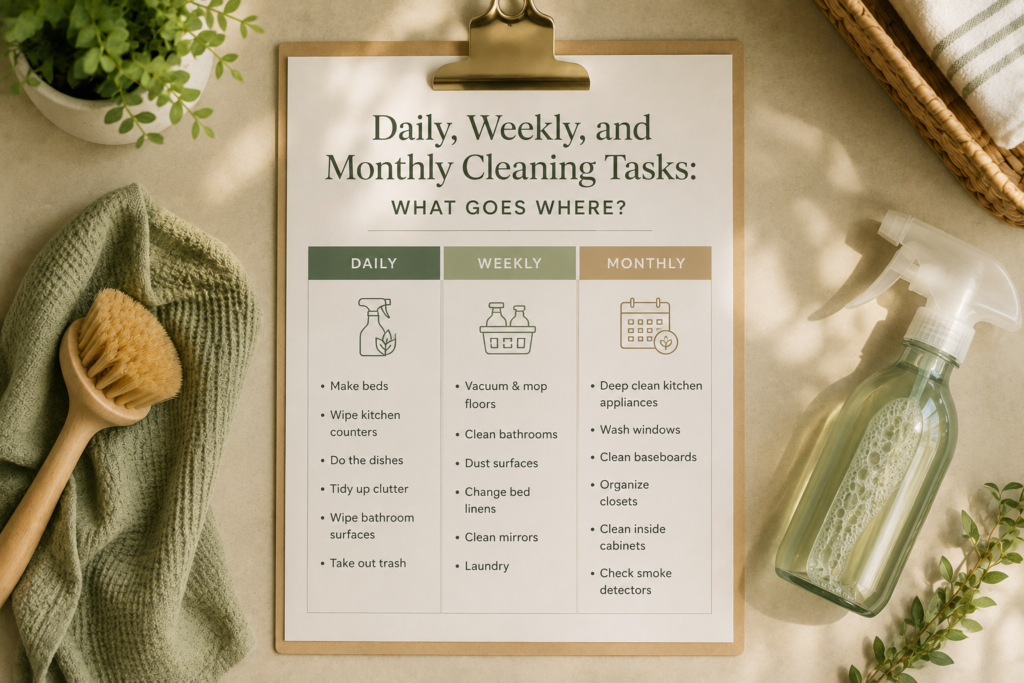
If you’re tackling a whole closet and need to figure out where everything goes — bins, baskets, dividers, or just donating half of it — our free decluttering checklist generator walks you through it room by room before you buy a single container.
Frequently Asked Questions
Are bins or baskets better for a pantry?
Bins, almost always — ideally clear ones with labels. Pantries need quick visual scanning, and baskets hide contents in a way that slows you down every time you’re looking for something specific.
Do I need drawer dividers if I already have bins in my closet?
Yes, if you have drawers in your dresser or closet system. Bins organize shelves and cubbies; dividers organize the inside of a drawer. They solve different layers of the same space.
What’s the most budget-friendly option?
Baskets, generally — secondhand baskets, fabric bins, and repurposed containers (shoeboxes, tins) cost far less than purpose-built organizing bins, and work just as well for low-visibility storage.