This post contains affiliate links. If you click and buy something, I earn a small commission at no extra cost to you — and I only ever recommend things I’d actually use in my own kitchen.
Table of Contents
I opened my cabinet yesterday to grab a single mixing bowl, and an entire avalanche of plastic lids rained down onto my head. I just stood there, forehead throbbing, staring at the plastic mountain covering my floor.
That was the moment I admitted that my strategy of shoving things in and closing the door really fast had officially failed. Something had to change. These small kitchen organization ideas are what actually did it.
So I sat down on the kitchen floor — right there, surrounded by lids — and decided to actually rethink how my whole space works. I tested every small kitchen organization idea I could find, and I kept only the ones that held up past week two. Here’s what made the final cut.
1. Stop ignoring the vertical space in your cabinets
Look, I get it. We just accept whatever shelf heights our kitchens came with because adjusting them feels like a whole project. Meanwhile, half the air inside those cabinets sits completely empty while plates pile up dangerously high on the bottom shelf.
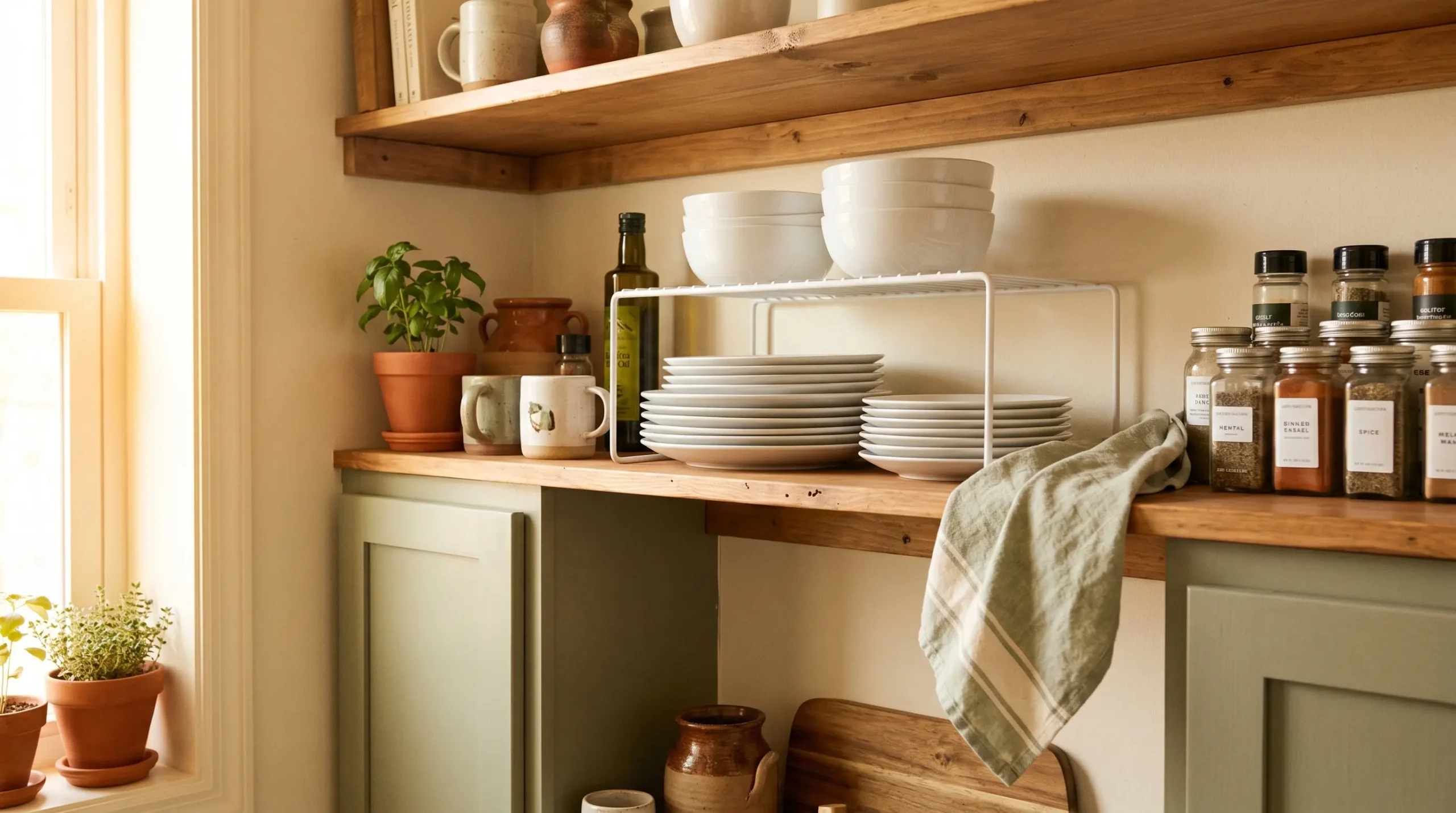
I finally bought a set of wire shelf risers, and suddenly my mug collection had its own dedicated level. Plates go underneath, bowls sit on top, and I doubled my usable cabinet room without touching a single wall.
You don’t need anything fancy — a basic metal version from Amazon snaps together in about two seconds and costs around $12. It’s one of those tiny fixes that makes you wonder what you were doing for the past three years.
🛒 What I use: A simple stackable wire shelf riser — any basic version works. Look for one with adjustable width so it fits different cabinet depths. This one on Amazon is the exact style I use.
2. The side of your fridge is free real estate
Honestly? I ignored the side of my refrigerator for years. I was convinced that sticking things to the outside of appliances would make my small apartment kitchen look chaotic. Then I ran out of pantry space and got desperate enough to try a magnetic shelf.
I mounted a magnetic rack right next to the stove and moved my olive oil, vinegar, and daily spices onto it. It freed up an entire section of counter I didn’t know I had. If you get one in a matte finish it actually looks intentional — like you planned it that way. (I didn’t, but nobody needs to know that.)
3. Tackling the dreaded under-sink black hole
We all have it. That dark, damp cave under the kitchen sink where cleaning supplies go to disappear forever. I once bought dish soap I already owned because I couldn’t see the backup bottle hiding behind the trash bags.
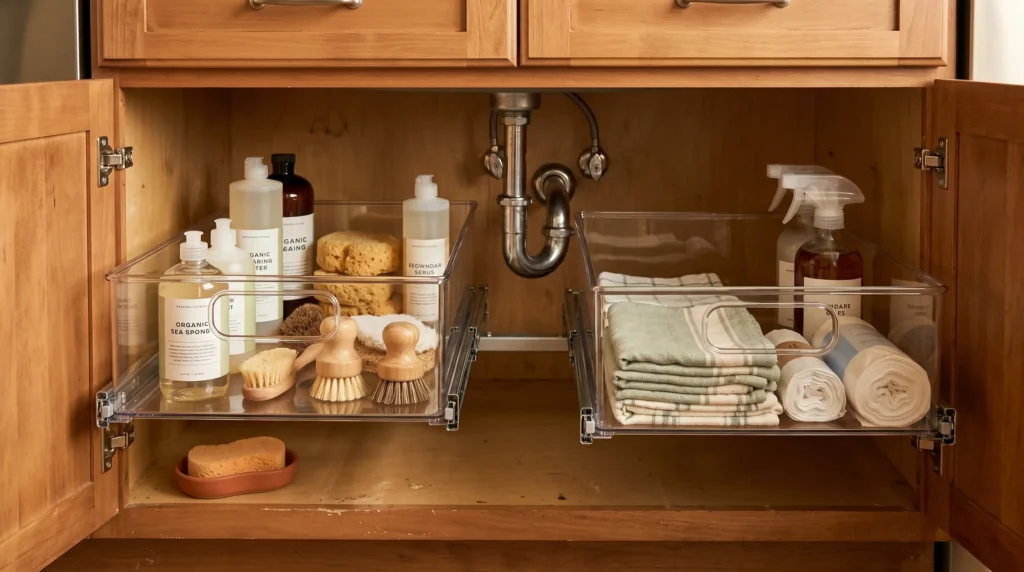
The fix that finally worked: I measured the space on either side of the drain pipe and bought two clear acrylic pull-out drawers. Any basic version with a sliding track works here. Now I pull the drawer forward, grab what I need, and push it back. The whole under-sink area went from terrifying to genuinely pleasant. That’s a sentence I never thought I’d type.
4. Storing pots and pans without losing your mind
I know, I know — coming from someone who once kept a frying pan inside the oven, giving pan storage advice feels a little rich. But I figured it out eventually.
Nesting pans scratches them, and hunting for a matching lid takes longer than actually cooking sometimes. I stopped stacking them entirely. Instead I use an adjustable vertical wire rack that holds pans on their sides, like folders in a filing cabinet. I grab exactly the pan I want without touching anything else.
For the lids: a few small tension rods from the hardware store, wedged horizontally inside a cabinet, create a little corral. Lids lean against them neatly. Total cost was about $4.
5. Real talk: you don’t need matching bins for everything
I need to say this because Instagram makes us feel genuinely terrible about our pantries. You do not have to pour your cereal into expensive glass jars to have an organized kitchen. I tried decanting everything last year and lasted exactly two weeks before the chip bags were back on the counter.
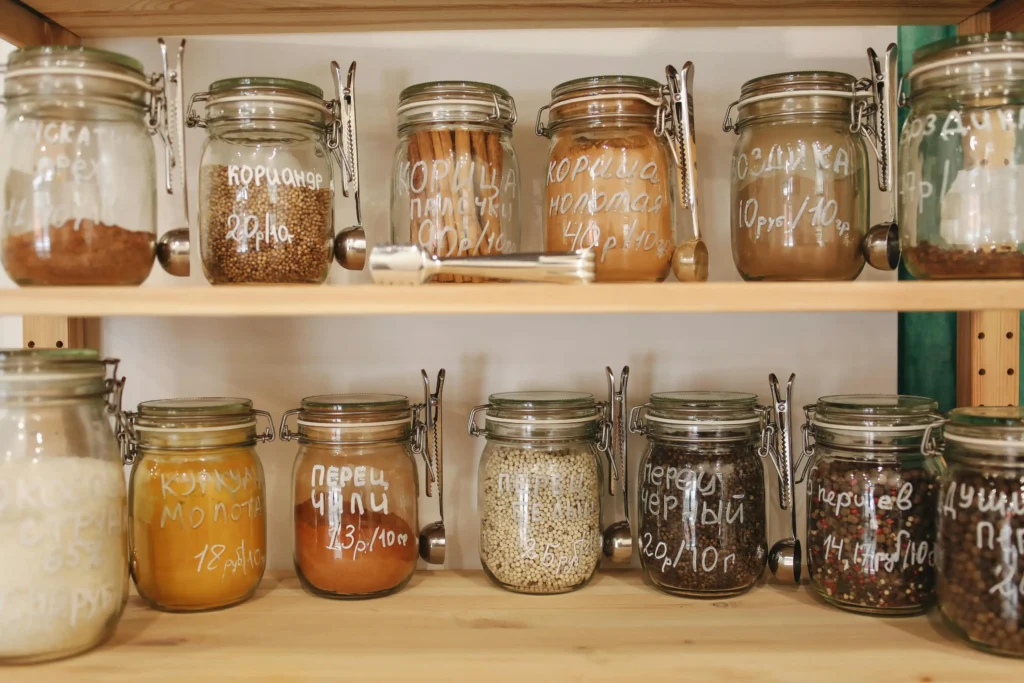
Matching containers look beautiful in photos and are a complete nightmare to maintain in real life. I only use clear bins for tiny things — snack bars, sauce packets, anything that tends to disappear. Everything else stays in the original packaging, lined up neatly on the shelf.
Organized doesn’t mean matching. It means you can find things. That’s it.
6. The inside of cabinet doors
I completely overlooked cabinet doors when I first started working on my small kitchen storage. The inside of a door is a perfectly good flat surface, and most of us are wasting it entirely.
I added adhesive hooks inside my lower cabinet doors. Oven mitts, measuring spoons, and a small cutting mat all hang there now. For the pantry door, an over-the-door metal rack holds all my foil, parchment paper, and cling wrap rolls — which used to jam my main drawers constantly.
7. A dedicated coffee station (non-negotiable)
Mornings are hard enough without hunting for filters while half asleep. I claimed one small counter corner and made it exclusively for coffee. Nothing else lives there.
Coffee maker, a small canister of beans, and exactly two favorite mugs. I found a wooden tray at a thrift store for $3 to pull it all together visually. Grouping items on a tray is one of those tiny styling tricks that makes a collection of things look deliberate instead of abandoned.
It also means I never have to think in the morning. I walk in, the tray is there, and I function. Highly recommend.
8. The junk drawer, finally dealt with
Every kitchen has one. The drawer of batteries, loose screws, three takeout menus from restaurants that closed, and a key to something unknown. Mine got so full last month I physically could not open it.
Here’s what actually worked: I emptied it completely and threw out anything I hadn’t touched in a year. Then I bought a set of cheap plastic drawer dividers — the kind that snap together — and gave every category its own section. Batteries in one square. Rubber bands in another. That mysterious key has its own spot now, which I think is a form of respect.
The whole process took 20 minutes. I’d been avoiding it for eight months.
9. Rolling carts for those weird kitchen gaps
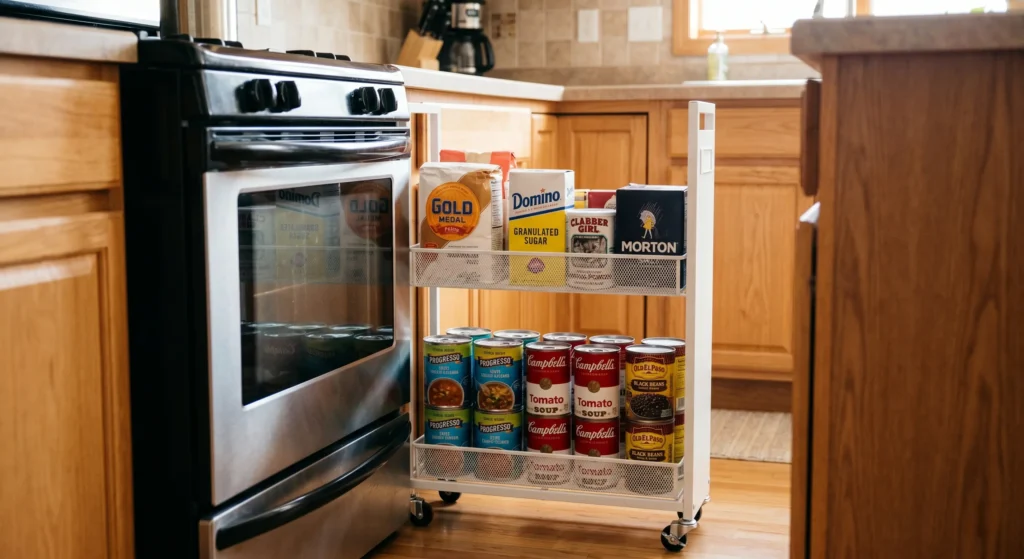
My kitchen has a six-inch gap between the oven and the counter that used to collect nothing but dust and dropped noodles. Completely wasted space.
I measured it, found a slim rolling cart that fits exactly in that slot, and loaded it with canned goods and heavy baking supplies. When I need something, I pull the whole cart out by the handle. When I don’t, it slides back and disappears. It’s one of my favorite small kitchen organization wins because it solved a space I had genuinely given up on.
10. Taming baking sheet chaos once and for all
Cookie sheets and cutting boards used to lean precariously against the cabinet wall, waiting to fall on me. Every time I reached past them, a baking tray would slam into my hand.
I bought a bamboo file sorter — the kind meant for office paperwork — and stood it inside the cabinet. My cutting boards and sheet pans slide perfectly into the slots, completely separated, completely stable. It costs about $15 and has saved me from minor kitchen injuries on a near-daily basis.
11. Getting the counters actually clear
Counter space is the most valuable real estate in any kitchen — and most of us use it to store appliances we use once a week.
I got ruthless. Everything except the coffee maker went into the lower cabinets. Toaster, blender, slow cooker — all of it. The first time I walked into a completely clear kitchen, I stood there for a second just taking it in. It changed how I feel about cooking entirely.
I also wipe the counters down every night before bed. Waking up to a clear surface sets a surprisingly calm tone for the whole morning — and I say this as someone who is deeply, spiritually not a morning person.
12. The spice jar situation
My spices used to live three rows deep in a dark cabinet where I could only ever see the front row. I bought cumin three separate times. Three. While the other two jars sat right there, completely invisible, gathering dust.
A tiered shelf insert fixed this completely. It works like stadium seating — every jar is visible at once, front to back. I keep the most-used spices in the front row (garlic powder, cumin, obviously, and smoked paprika) and the rarely-used ones in the back.
13. Root vegetables without sacrificing counter space
Onions and potatoes are annoying to store. Too much light ruins them. They roll off shelves. And keeping them on the counter means they take up valuable prep space.
I solved this with hanging mesh bags mounted inside a cool, dark lower cabinet. They need airflow to stay fresh, and the bags provide exactly that. The counter stays clear, the vegetables stay fresh longer, and I feel quietly smug about it every time I open that cabinet.
14. The space above your cabinets
If your cabinets don’t reach the ceiling, you have a storage opportunity that most people completely ignore. I ignored it too, because I thought putting things up there would look cluttered and chaotic.
Three matching woven baskets changed my mind. I toss holiday baking tins, rarely-used serving platters, and the giant roasting pan up there. Matching baskets keep it looking intentional. I pull them down once or twice a year and forget they exist the rest of the time. Out of sight, out of mind — but actually organized.
15. The water bottle situation
Water bottles multiply. I don’t know how. I don’t know when. They just do.
Opening the drinks cabinet used to mean bracing for a metal tumbler to fall directly onto my feet. They don’t stand up, the lids are never attached, and finding a matching set is a whole puzzle I don’t have the energy for before 8am.
A stackable wine rack from a discount store solved this entirely. The curved slots hold round water bottles perfectly on their sides. They stay put, they’re easy to grab, and the lids go in a small bin right next to them. Problem genuinely solved.
16. Oversized mixing bowls and colanders
Big mixing bowls and colanders are awkward, heavy, and refuse to nest properly with anything else. My colander used to live wedged behind my pots, which made pasta nights an exercise in patience I don’t always have.
I dedicated one deep lower cabinet exclusively to the weirdly-shaped items. Largest bowl on the bottom, colander nested inside it, smaller bowls stacked on top. Keeping heavy items low means I’m not dropping glass bowls from upper shelves anymore. Simple logic, took me embarrassingly long to figure out.
17. Finding an actual home for kitchen towels
Kitchen towels used to live everywhere and nowhere at the same time. One draped over the sink, one stuffed in a drawer, one crumpled near the stove. Finding a clean one when I needed it was a frantic little scavenger hunt every single time.
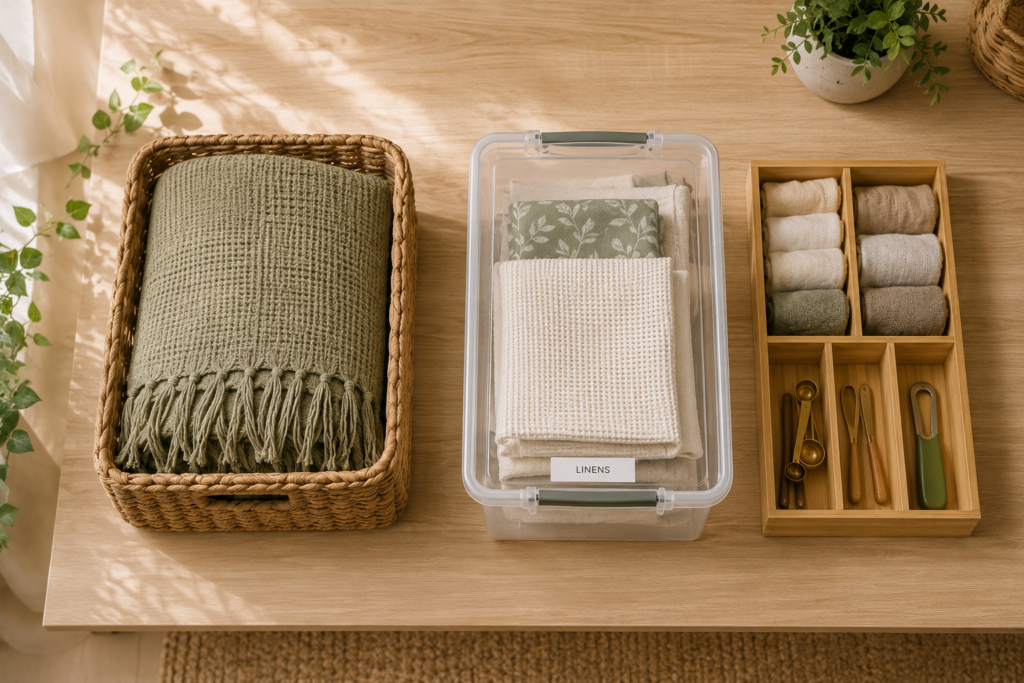
The fix was almost too simple. I roll each clean towel into a tight cylinder — like hotels do — and stand them upright in a small fabric bin under the sink. I grab one, use it, toss it in the laundry. I always know exactly how many are clean just by glancing in the bin. No more towel chaos.
18. A dedicated baking zone
I love baking, but pulling flour from one cabinet, sugar from another, and baking soda from somewhere completely different turned every cookie session into a cabinet tour I didn’t ask for. I also managed to coat my entire kitchen in a thin layer of flour before I’d even started mixing.
Now one lower cabinet belongs entirely to baking. Measuring cups, flours, sugars, extracts, and baking powder all live together in a single clear bin. When I want to bake, I pull the whole bin out onto the counter and everything I need is right there. It takes one second instead of ten minutes. Baking is fun again.
Making peace with your kitchen setup
Here’s the thing about small kitchen organization — you’ll probably rearrange things at least twice before it clicks. That’s not failure, that’s just how it works. The goal isn’t a perfect Instagram pantry. It’s a kitchen that makes your actual daily life feel a little easier.
Start with the one cabinet that annoys you most. Not all of them. Just one. Fix that today, and see how it feels.
And if a plastic lid avalanche lands on your head in the process, you’re in good company.
Which cabinet would you fix first? Leave a comment below — I read every single one. And if this helped, save it to Pinterest so you can find it when you’re ready to tackle the next drawer.
Frequently Asked Questions About Small Kitchen Organization Ideas
What is the best way to organize a small kitchen with limited cabinet space?
Start by going vertical — shelf risers, door-mounted racks, and the space above cabinets are all underused in most kitchens. Then clear your counters of anything you don’t use daily. You’ll be surprised how much larger a small kitchen feels with clear surfaces and doubled cabinet capacity.
How do I organize a small kitchen on a budget?
Some of the best small kitchen storage solutions cost almost nothing. Tension rods ($2-4) corral pot lids. A bamboo file sorter ($10-15) holds baking sheets. Adhesive hooks on cabinet doors organize tools. Start with what you have before buying anything new — most kitchens just need a better system, not more products.
How do I keep my small kitchen organized long term?
The secret is building systems that require zero effort to maintain. Everything needs a specific home, and that home should be as close as possible to where you actually use it. If putting something away takes more than two seconds, it won’t happen consistently. Make organization the path of least resistance.
What should I declutter from my kitchen first?
Start with duplicates and things you haven’t touched in a year. Most kitchens are organized around items they no longer need. Clear those out first, then create a system for what’s left. You’ll often find you need far fewer organizers than you thought — just more intentional placement.
Do I need expensive organizers for a tidy small kitchen?
No. Many of the best small kitchen organization ideas cost under $15 or use things you already own. A wine rack works for water bottles. A file sorter holds baking sheets. A $3 thrift store tray creates a coffee station. Expensive matching containers are optional — a good system is not.