Every home has one. The drawer that starts as a catch-all for batteries and rubber bands and becomes, over six months, an archaeological site of broken pens, mystery keys, and things you’re keeping just in case.
The problem with the junk drawer isn’t that it exists. It’s that most people organize it wrong — or give up and leave it as a write-off. Neither works.
Here’s the thing: a junk drawer that actually functions isn’t a contradiction. It’s just a drawer for miscellaneous things that have a real system inside it. This is how to build one that stays organized.
Table of Contents
Why Junk Drawers Always Get Out of Control
A junk drawer fails for one reason: it has no categories. Everything goes in. Nothing has a specific spot. So over time it becomes a compressed pile of everything that didn’t have anywhere else to go.
The fix isn’t willpower. It’s structure. Once the drawer has defined zones — even just three or four — things stop piling because you can actually see where each item belongs.
The second problem is keeping things that don’t belong in a junk drawer at all. Dead batteries. Broken things you’re going to fix. Cords for devices you no longer own. These aren’t junk drawer items — they’re clutter wearing a junk drawer costume.
Step 1: Empty It Completely
Pull the entire drawer out if you can. Dump everything onto a flat surface. Don’t pick through it in place — that’s how you end up moving things around rather than deciding anything.
Now wipe the inside of the drawer. This physical reset matters more than it sounds. You’re starting over, not reorganizing the same mess.
If there’s a drawer liner, replace or clean it. If there isn’t one, this is the moment to add one — a non-slip liner keeps dividers from sliding and makes the whole thing feel more intentional. They cost almost nothing and last for years.
Step 2: Sort Everything Into Four Piles
Go through everything on the surface and sort into: Keep in drawer, Belongs elsewhere, Trash, Unsure.
Trash immediately: Dead batteries, dried-out pens (test them), broken items you haven’t fixed in six months, cords for things you no longer own, expired coupons, and anything you genuinely cannot identify.
Belongs elsewhere: Things that have an actual home somewhere in the house but ended up here. Take them there now, before anything goes back in the drawer.
Unsure: Set aside. If you still can’t decide at the end, it probably goes in trash or belongs elsewhere. The bar for “keep in a junk drawer” should be: I use this occasionally and there’s nowhere better for it.
Step 3: Define Your Categories
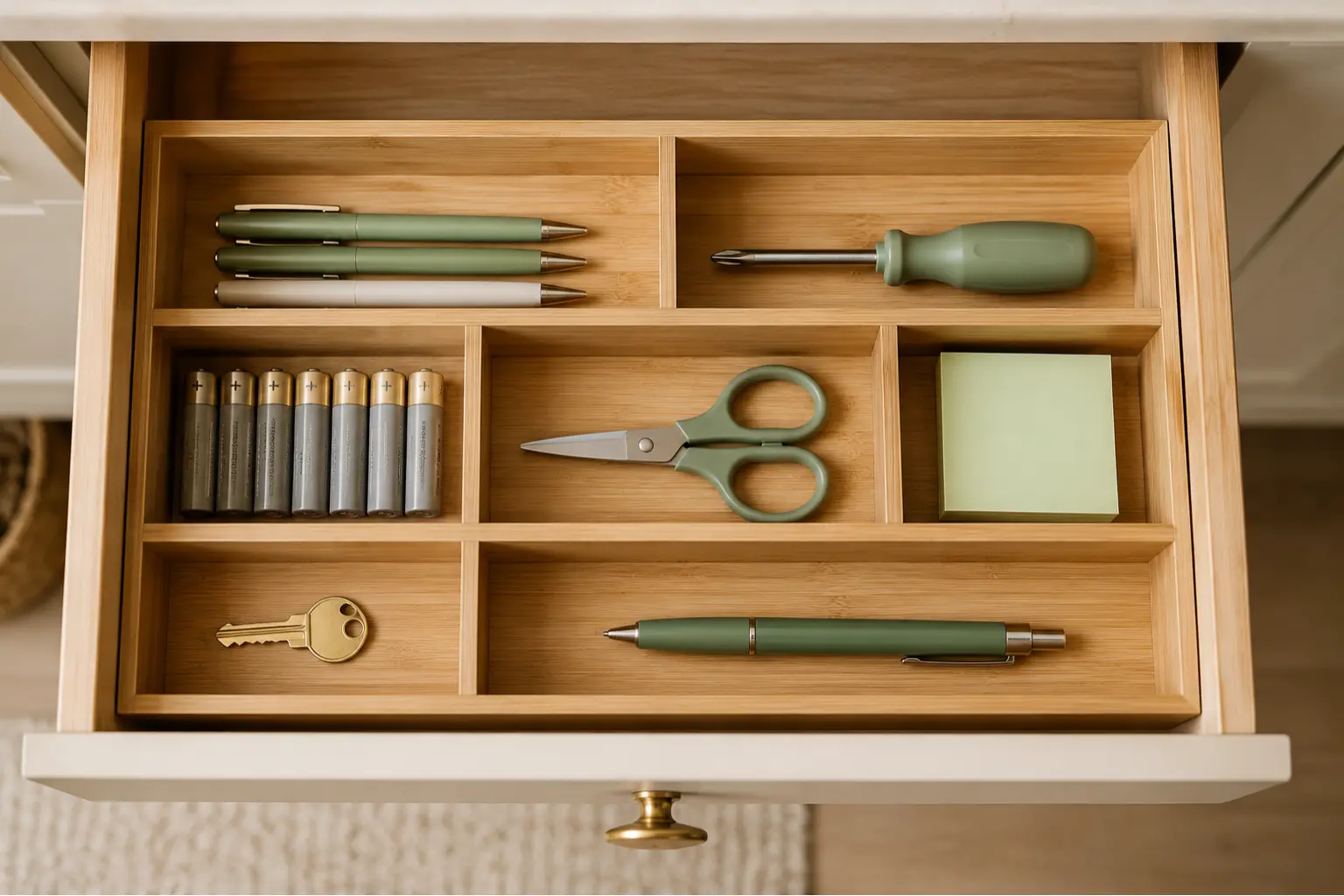
Before anything goes back in, decide what categories this drawer will hold. Most homes need roughly these zones:
Tools: A small screwdriver, tape measure, picture hooks, a few nails. Not a full toolkit — just the things you grab once a month without going to the garage.
Batteries: A dedicated small container. Only live batteries. Dead ones go in the trash or a separate recycling spot immediately.
Writing/office: Pens that work (test them), a pencil, sticky notes, a notepad, scissors, maybe a stapler if it fits.
Miscellaneous home: The things that genuinely don’t fit anywhere else — spare keys, the remote for the fan, rubber bands. This zone should stay small. If it’s getting big, some of those things need a home, not a dump zone.
According to The Spruce, limiting a junk drawer to four or five categories is the single most effective way to keep it from reverting to chaos.
Step 4: Add Dividers (This Is Non-Negotiable)
A junk drawer without dividers will be a junk drawer again in three weeks. The dividers are what create the zones that make the system work.
You don’t need matching acrylic organizers. Small boxes, the cardboard trays from packaging, even cut-down cereal boxes work. What matters is that each category has a defined space with physical boundaries. When batteries have a specific container, you put them in that container. Without it, they go wherever there’s room.
If you do want to buy something, an expandable bamboo drawer organizer is the best value — fits most drawer sizes, looks clean, and costs around $15. For a full room-by-room approach to this kind of contained organization, the bathroom storage post uses the same logic in a trickier space.
How to Actually Keep It That Way
The drawer stays organized if two things are true: things go back in their zone, and the bar for adding new things is real.
The second one is harder. The drawer gets cluttered again because we keep using it as a default landing zone for things we don’t know what to do with. That’s what created the original problem.
The rule that works: if you’re about to put something in the drawer and there’s no clear zone for it, it doesn’t go in the drawer. Either it gets a home, or it gets thrown away. Not temporary storage — a real decision.
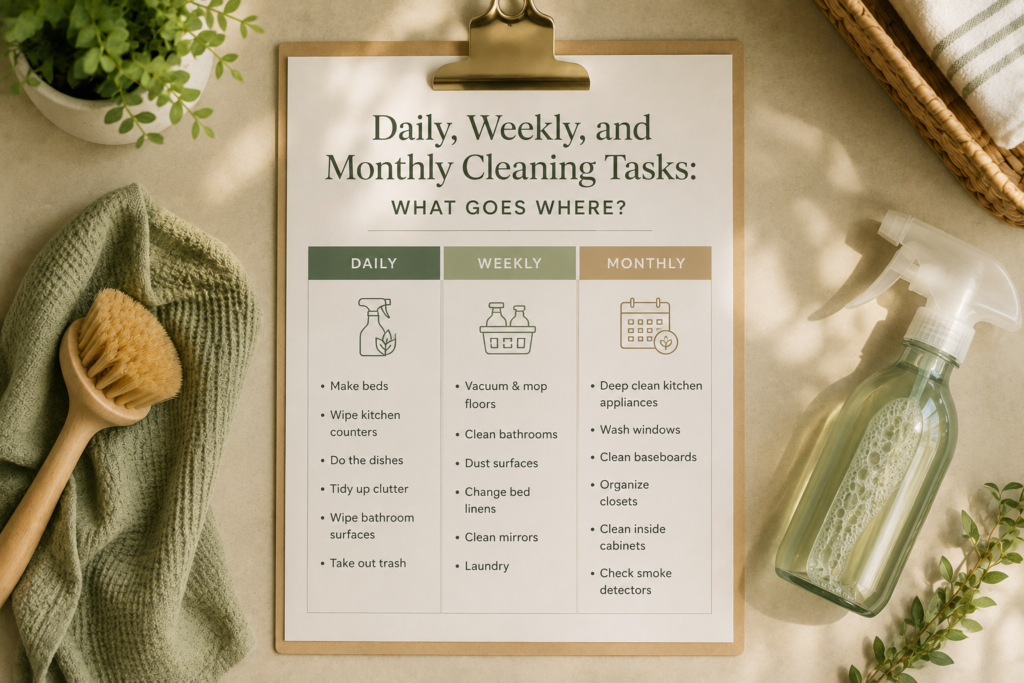
Once a month, a 2-minute check: anything that snuck in without a zone, anything dead or broken, anything that belongs somewhere else. That’s all it takes to maintain what you built. Pair this with the weekly cleaning schedule printable and the monthly drawer check becomes part of your routine automatically.
Real talk: The junk drawer isn’t the problem. It’s the symptom. It gets full because other things don’t have homes, and the drawer is the path of least resistance. Organizing it is fast. Building the habit of not defaulting to it for every homeless object — that’s the actual work.
Take 20 minutes this weekend. Empty it, sort it, zone it, divider it. The physical act takes less time than you think. And unlike most organizing projects, this one stays done if you follow the one rule: no zone, no entry.
Frequently Asked Questions
How do I organize a junk drawer?
Empty it completely, wipe it out, sort everything into keep/trash/belongs elsewhere/unsure, define 4-5 categories for what stays, add physical dividers to create zones, and put only categorized items back in. The whole process takes 20-30 minutes.
What should go in a junk drawer?
Things you use occasionally with no better home: small tools (screwdriver, tape measure), live batteries, working pens and basic office supplies, scissors, spare keys, and a small miscellaneous zone. Everything else should either have its own home or be thrown away.
Why does my junk drawer always get messy again?
Because it doesn’t have defined zones. Without physical dividers and categories, everything gets tossed in wherever there’s space. Adding structure — even cheap cardboard dividers — is what makes the system hold.
What is the best junk drawer organizer?
An expandable bamboo drawer organizer works for most drawers and costs around $15. Small boxes, repurposed cardboard trays, or even takeout containers also work — what matters is that each category has a physical boundary, not that the containers match.
How often should I clean out my junk drawer?
A 2-minute monthly check is enough once it’s properly organized: remove anything that snuck in without a zone, dispose of dead batteries or broken items, return anything that belongs somewhere else. A full re-sort is only needed once or twice a year.
Should I label my junk drawer sections?
Labels help when multiple people use the drawer — they make the zones obvious so items go back in the right place. For a single-person household, the physical dividers alone usually create enough visual separation to maintain without labels.
What should I throw away when cleaning my junk drawer?
Dead batteries, pens that don’t work, cords for devices you no longer own, broken items you haven’t fixed in 6+ months, expired coupons or vouchers, mystery keys you can’t identify, and anything you haven’t touched in over a year.
How do I stop my junk drawer from filling up again?
Apply one rule: no zone, no entry. If something doesn’t fit an existing category, it doesn’t go in the drawer — it either gets a proper home elsewhere or gets thrown away. That one boundary prevents the accumulation that created the problem in the first place.