
Someone in a Facebook group once shared their weekly cleaning schedule and I saved it immediately. It had color-coded tasks, time estimates, a deep-clean rotation for every appliance in the house, and a little checkbox for “wipe down light switches.” I printed it out. I laminated it. I hung it on the fridge.
I followed it for four days.
Here’s the thing — it wasn’t my schedule. It was someone else’s life, someone else’s house, someone else’s free time on a Wednesday. And no matter how beautiful it looked, I couldn’t make myself fit into it. So I made my own. And then I made a blank one so you could do the same.
This post walks you through how to use the free Cozyner weekly cleaning schedule printable — and more importantly, how to actually fill it in so it works for the way you actually live.
This weekly cleaning schedule printable is designed to be blank on purpose. Because the only schedule that works is one that fits around your actual life — not a template built for someone else’s mornings.
Table of Contents
Why Most Cleaning Schedules Fall Apart by Day Three
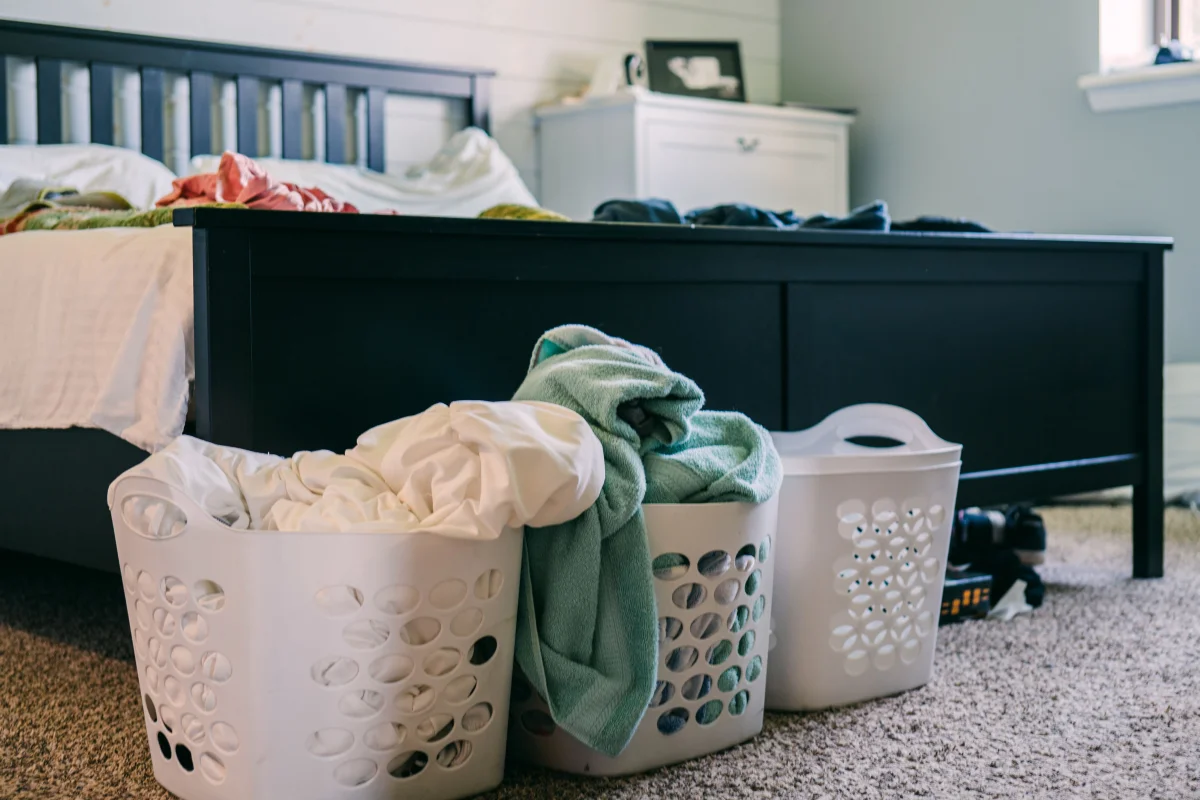
It’s not a discipline problem. It’s a design problem. Most cleaning schedules you find online are built for a theoretical person who has two free hours on Saturday mornings, no kids, no job that drains every last drop of energy, and a genuine enthusiasm for mopping. That person is not most of us.
The other issue is that most schedules treat every task as equally urgent. Deep-cleaning the oven gets the same visual weight as wiping down the counters, even though one takes four minutes and the other takes forty. When your list looks overwhelming, you don’t do any of it.
A schedule that works for you has to start with your week, not someone else’s ideal week. That’s the only thing that actually matters. A dedicated cleaning planner can help you see your full week at a glance while you’re building the habit.
Before You Download: Know Your Cleaning Baseline

Before you fill anything in, ask yourself two honest questions. First: what’s the minimum my home needs to feel livable to me? Not Instagram-clean, not parent-visit-clean — just the level where you can sit on the couch and breathe. Second: which days do I actually have any energy left?
For most people, the answers look something like: dishes done, floors not crunchy, bathroom not embarrassing. And Tuesday and Thursday evenings plus one chunk on the weekend. That’s your real schedule. Everything else is aspiration.
Write those down before you even look at the printable. It’ll change how you fill it in completely.
What’s in the Free Cozyner Cleaning Schedule Printable
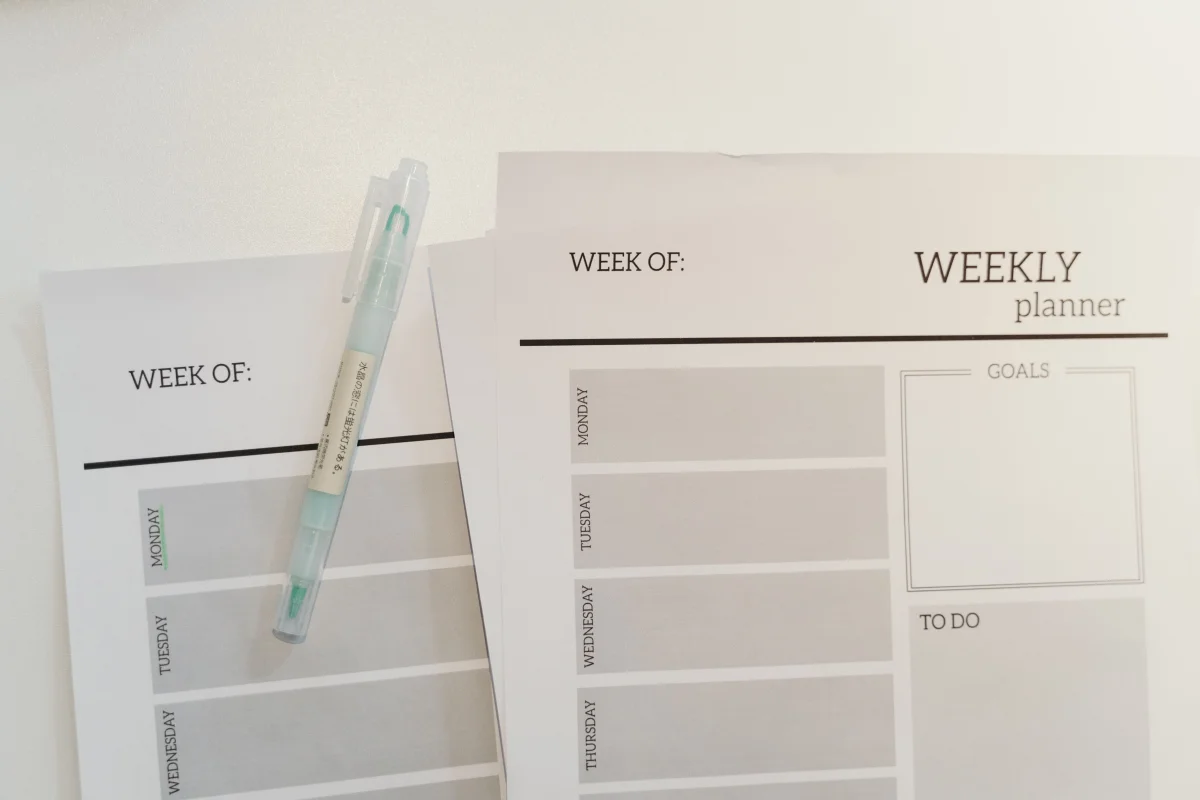
The printable is one page. It has seven columns (one per day), three time slots per day (morning, afternoon, evening), and a small notes section at the bottom for your weekly deep-clean focus. Nothing fancy. Nothing laminated. Just space for your actual plan.
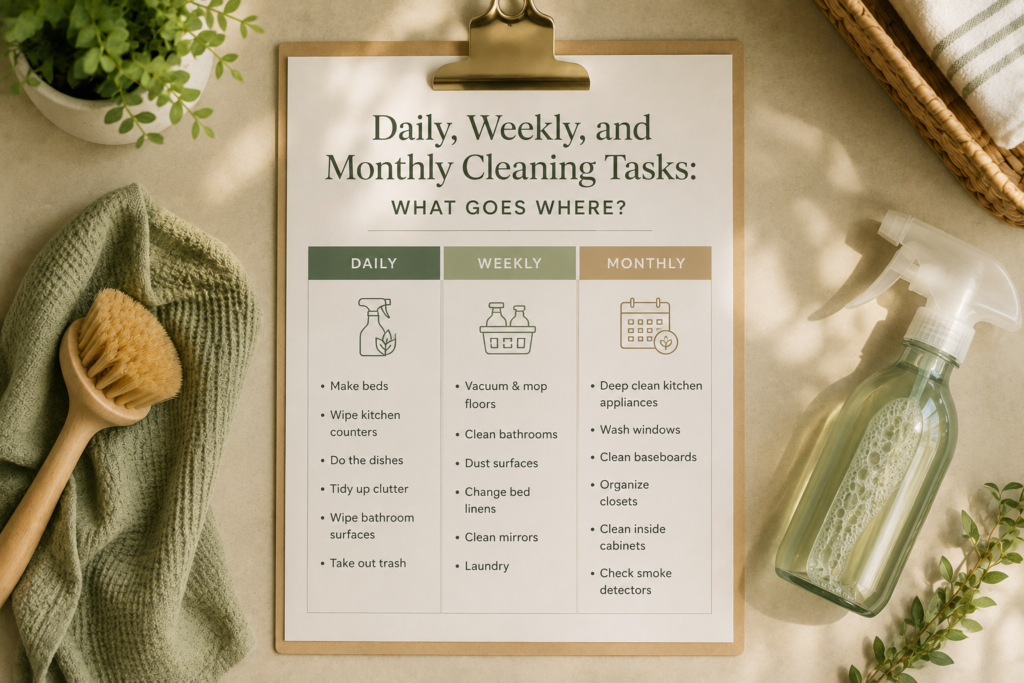
There’s also a task bank on the side — a list of common cleaning tasks sorted by how often most people do them (daily, 2-3x week, weekly, monthly). You don’t have to use every task. It’s just there to jog your memory so you’re not staring at a blank grid wondering what cleaning even is.
🖶 Get the Free Weekly Cleaning Schedule
One page. Blank on purpose. Fill it in your way.
Download Free Printable →No email required. Instant PDF download.
How to Fill It In: The Cozyner Method

Start with your non-negotiables. These are the tasks that have to happen every single day or your home descends into chaos within 48 hours. For most people that’s: dishes, kitchen wipe-down, and a quick tidy before bed. Put those in first, every day, in whatever time slot is most realistic.
Next, add your two or three weekly tasks. Vacuuming, cleaning the toilet, mopping, changing bed sheets. Pick the days you have the most bandwidth and slot them in. One task per day is usually enough. Two if you’re feeling ambitious.
Then add one monthly deep-clean focus per week. Baseboards one week, inside the fridge the next, behind the couch the one after. Small enough that it doesn’t feel like a project. A good cleaning caddy keeps everything you need in one place so you’re not hunting for supplies mid-task. If you want a solid 15-minute daily routine to anchor all of this, my realistic daily cleaning routine pairs perfectly with this printable.
Customizing It for Your Actual Life

If you live alone, you can probably cut the daily tasks in half. A single person’s kitchen doesn’t generate the same volume as a family of four. Be honest about your reality and schedule accordingly — a lighter plan you actually do beats a thorough plan you abandon.
If you have kids or a partner, involve them. Even a seven-year-old can put their own dishes in the dishwasher. Write their names next to tasks on the schedule. It becomes a household document instead of your private burden.
If your schedule looks completely different week to week, try color-coding instead of writing specific days. Use one color for “whenever I have 10 minutes” tasks and another for “this genuinely needs to happen once a week.” It gives you flexibility without losing accountability.
Rooms, Tasks, and How Long They Actually Take
Most cleaning tasks take less time than you think they will. The dread is usually longer than the task. Wiping down the bathroom sink takes 90 seconds. Vacuuming a small living room takes six minutes. Cleaning the toilet — actually cleaning it — takes four minutes.
When you’re filling in your schedule, break tasks down. Don’t write “clean bathroom.” Write “toilet and sink” (10 minutes) and “shower and floor” (15 minutes) separately. Breaking it down removes the mental weight. A simple kitchen timer makes a surprising difference — racing against a 10-minute clock turns cleaning into something almost fun.
For a room-by-room breakdown with realistic time estimates, this kitchen organization post has practical timing notes you can apply to your whole home.
What to Do When You Fall Behind

You will fall behind. Not because you’re bad at this — because life has a way of eating Wednesdays whole and not apologizing. When it happens, the worst thing you can do is try to catch up on everything you missed.
Instead: pick the three most important things on your list and do only those. Reset. Start fresh from today. The schedule is a tool, not a report card. You don’t get graded on the weeks you missed — you just pick up where you can.
Honestly? The people with the cleanest homes aren’t the ones following a perfect schedule. They’re the ones who’ve gotten good at recovering quickly when it falls apart.
Real talk: A cleaning schedule doesn’t have to be a life-changing document. It just has to be useful enough that you glance at it on a Tuesday night and do the one thing it says. That’s the whole bar. Clear it and call it a win.
Download the printable below, fill in the first week lightly, and see what actually happens. Adjust from there. The best cleaning schedule is the one that survives contact with your real week.
🖶 Get the Free Weekly Cleaning Schedule
One page. Blank on purpose. Fill it in your way.
Download Free Printable →No email required. Instant PDF download.
If you’re looking to build a complete cleaning system around it, start with my daily cleaning routine for busy people. And if you want to extend the same organized thinking to your kitchen, this pantry organization post shows how a simple weekly reset keeps everything in order.
Frequently Asked Questions
How do I create a weekly cleaning schedule that actually works?
Start with your real week, not an ideal one. Identify which days you have energy and what your non-negotiable daily tasks are. Build outward from those two things rather than copying a schedule designed for someone else’s life.
How often should you clean each room?
Kitchens and bathrooms benefit from daily quick-cleans (5-10 minutes) and a deeper clean once a week. Living areas need vacuuming 2-3 times a week. Bedrooms once a week. Adjust based on how many people live in your home.
Is a printable cleaning schedule better than an app?
For most people, paper works better because you can see it without unlocking your phone. Hanging it somewhere visible means it stays in front of you without requiring any effort to access.
How do I get my family to follow a cleaning schedule?
Make it visual and assign specific names to specific tasks. Start with simple, clear tasks that don’t require supervision. Consistency from you over a few weeks makes it feel like a normal part of the household routine.
What cleaning tasks should be done daily?
The minimum effective daily routine: wash dishes or run the dishwasher, wipe down kitchen counters, quick 10-minute tidy before bed. Everything else can be scheduled weekly or monthly.
How long does a weekly cleaning schedule take to follow?
If you do small daily tasks consistently, the weekly cleaning takes 30-60 minutes total for most average-sized homes. Letting things pile up turns a 45-minute weekly clean into a 4-hour project.
Can I use this printable for a shared apartment?
Absolutely. Write names next to tasks and use it as a shared household document. Having something visible and agreed-upon removes a lot of the friction in shared living situations.
What’s the difference between a cleaning schedule and a cleaning routine?
A routine is a set sequence of tasks you do in one session. A schedule maps those routines across the week or month. They work best together — use the schedule to plan when, use the routine to execute.