I tried reading on my sofa last weekend and my eyes kept darting to a massive pile of unfolded laundry sitting on the coffee table. I ended up folding three loads of shirts instead of finishing my chapter.
The visual clutter completely derailed me.
I realized I needed something different — a space that felt totally separate from my daily chaos. A corner that was just for reading. Not for stacking clothes. Not for scrolling my phone. Just books and quiet.
Coming from someone who uses a precarious stack of unread paperbacks as an actual nightstand, I know I’m not exactly interior design royalty. But I managed to build a spot that makes me want to put my phone down. And here’s the part everyone assumes: it didn’t cost much. Keep reading to see exactly how I built a peaceful little escape right in my living room.
Table of Contents
Stop reading in the middle of your clutter
We usually read wherever we happen to land — on the couch, in bed, in a kitchen chair. But reading in the middle of your main living space means constantly seeing things you need to clean.
Your brain cannot fully relax when a dirty kitchen counter sits in your peripheral vision. Or when that pile of mail is visible from where you’re sitting. You need a space that faces away from the chaos.
I noticed my stress levels dropped the second I turned my chair toward a blank wall instead of the television. Giving your eyes a quiet place to rest helps your brain quiet down. Having a specific boundary tells your body: this exact spot means rest time.
Hunting for the perfect blank space
Here’s the thing — you don’t need an entire spare room. Some of the best reading nooks live in weird architectural spaces we normally ignore. That gap between your sofa and the window. A strangely deep hallway corner. The edge of a bedroom that collects dust.
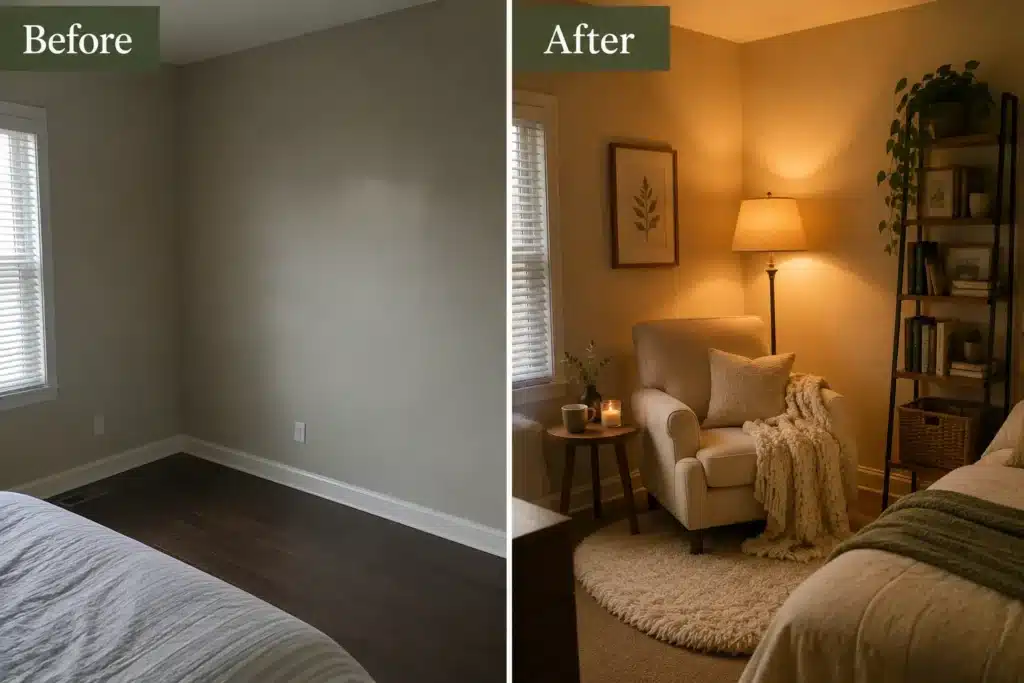
I chose a tiny corner in my bedroom that was previously good for nothing except dog hair. Measuring the space before moving furniture saved me a massive headache. Even a three-foot-wide wall provides more than enough room to create something beautiful.
Choosing a chair that won’t hurt your back
A beautiful chair means absolutely nothing if your lower back aches after twenty minutes.
I see gorgeous reading spaces online featuring stiff wooden chairs that look like torture devices. Comfort has to dictate everything. There’s no point building a cozy corner if sitting in it is painful.
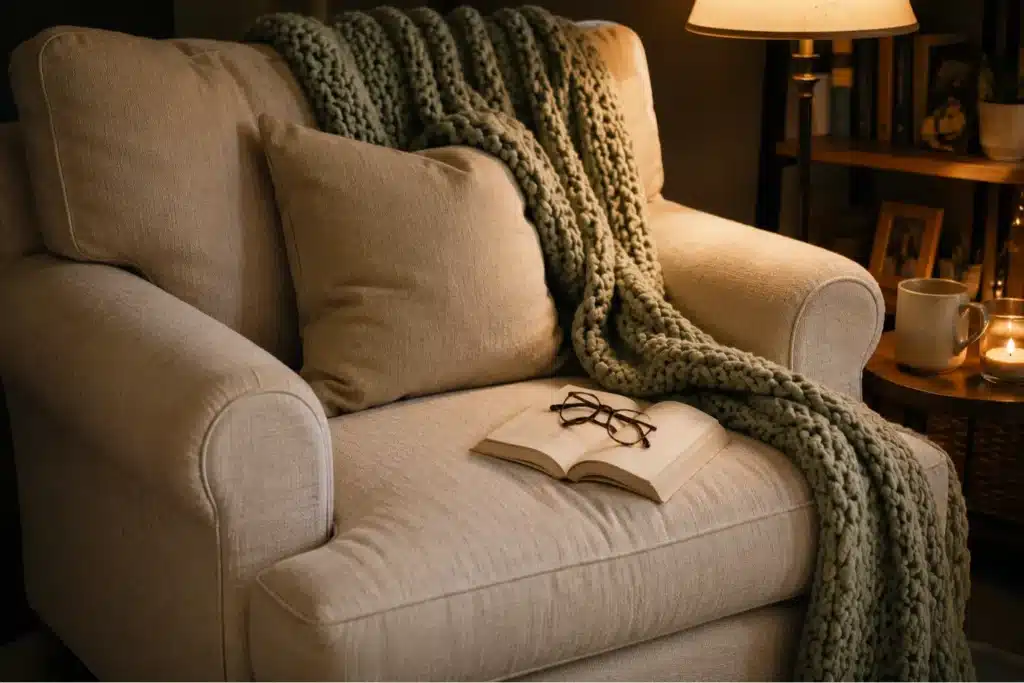
I grabbed an old upholstered armchair from my basement and threw a blanket over it. You want something wide enough to pull your knees up to your chest. Test a chair by sitting in it sideways — that tells you everything about its long-term comfort.
Why I recommend the floor cushion route
Buying furniture is expensive when you just want a reading spot. If you want a corner but lack the cash for an armchair, floor seating works perfectly. Lowering your seating makes a cramped corner feel instantly taller and more spacious.
I use a massive tufted floor cushion in my guest room setup. Any thick, oversized pillow designed for the floor provides incredible support. Stacking two of them together creates a makeshift chair that costs almost nothing.
Setting up the perfect lighting situation
Harsh overhead lighting instantly kills relaxation. Sitting under a bright ceiling light feels like waiting in a dentist’s office, not unwinding at home.
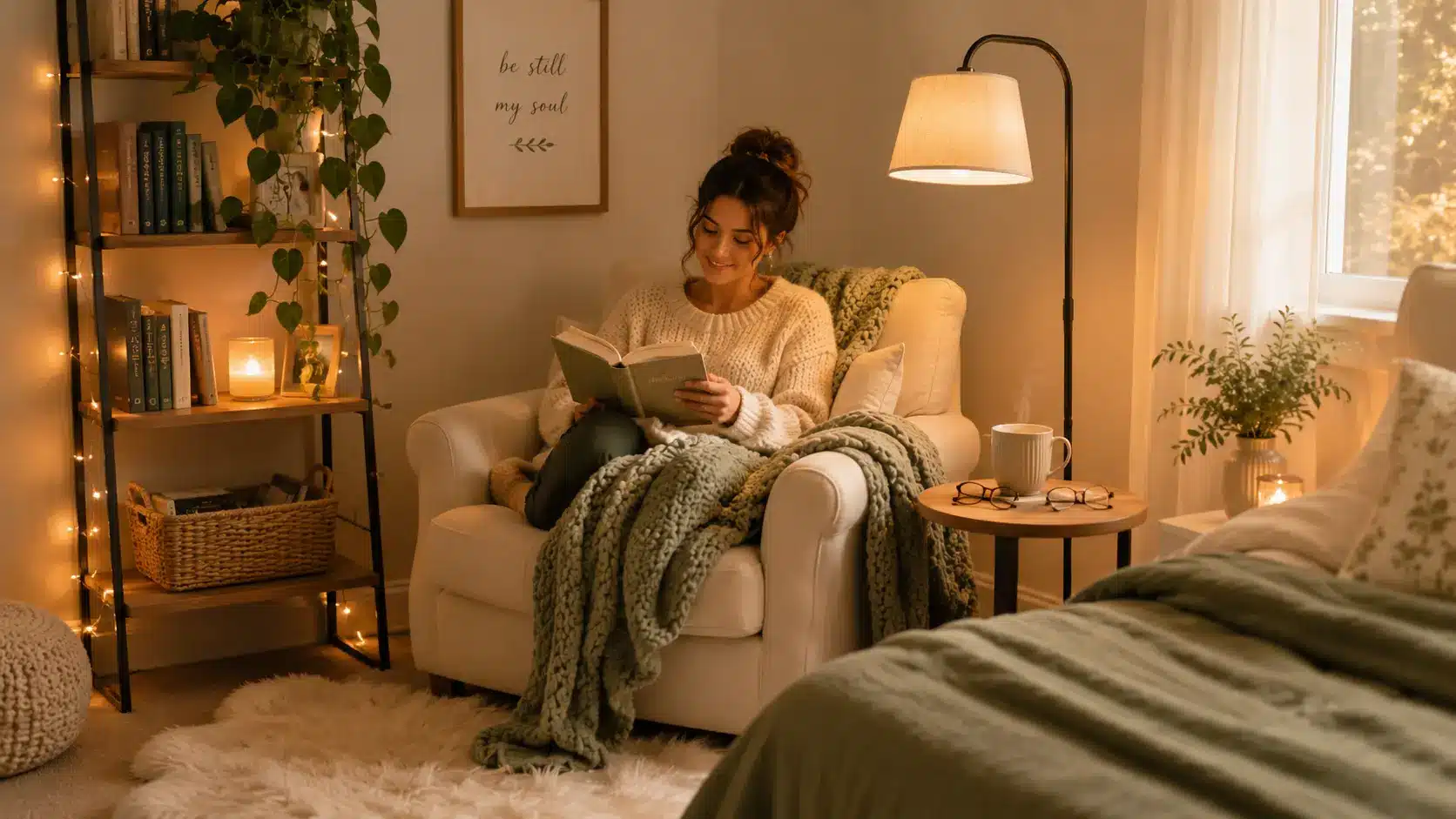
You need multiple sources of soft light to make the space feel inviting after the sun goes down. I bought a cheap floor lamp with a warm amber bulb to cast a soft glow over my shoulder. The light points directly at my book so I avoid eye strain during long evening sessions.
Avoid any bulbs labeled “cool white” or “daylight” for a relaxation space. You want warm amber light — it signals your brain that it’s time to rest.
Bringing in the magic of string lights
Honestly? Adding tiny lights completely changes the atmosphere of a boring wall.
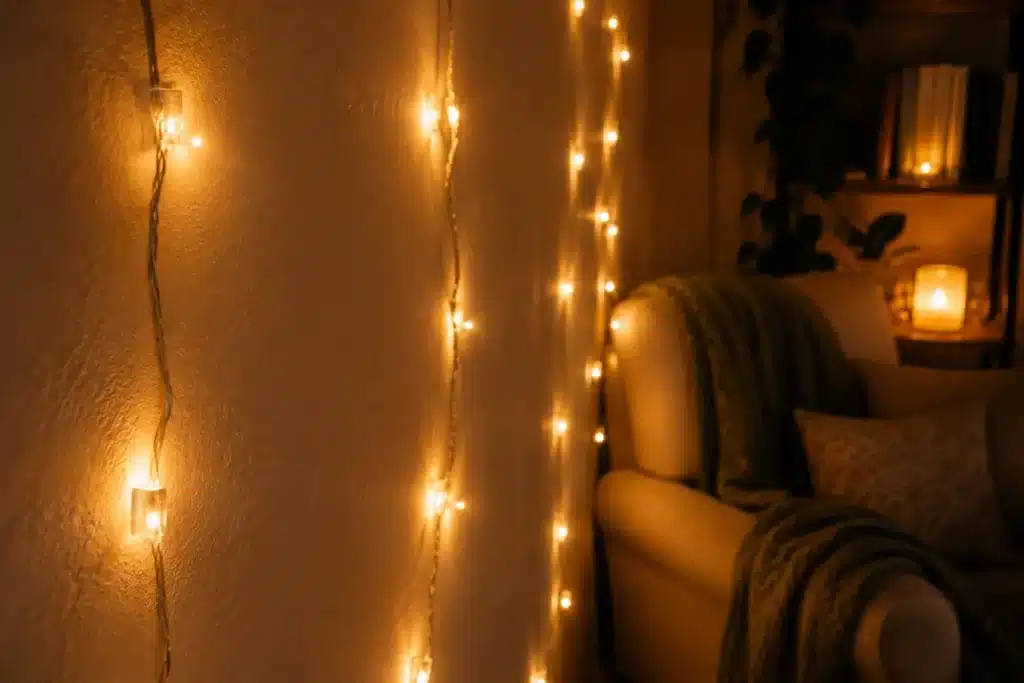
I strung basic warm white fairy lights behind my chair using simple clear wall hooks. Any cheap set of wire lights from the hardware store does the job beautifully. Turning off the main house lights and clicking on those tiny bulbs signals my brain that the day is officially done.
They add a soft, ambient glow that feels incredibly comforting on rainy afternoons. Plus, they cost almost nothing and require zero DIY skills to install.
Finding a home for your current reads
Books easily become visual clutter if you just stack them directly on the floor. I wanted my favorites nearby, but I desperately needed them to look intentional rather than messy.
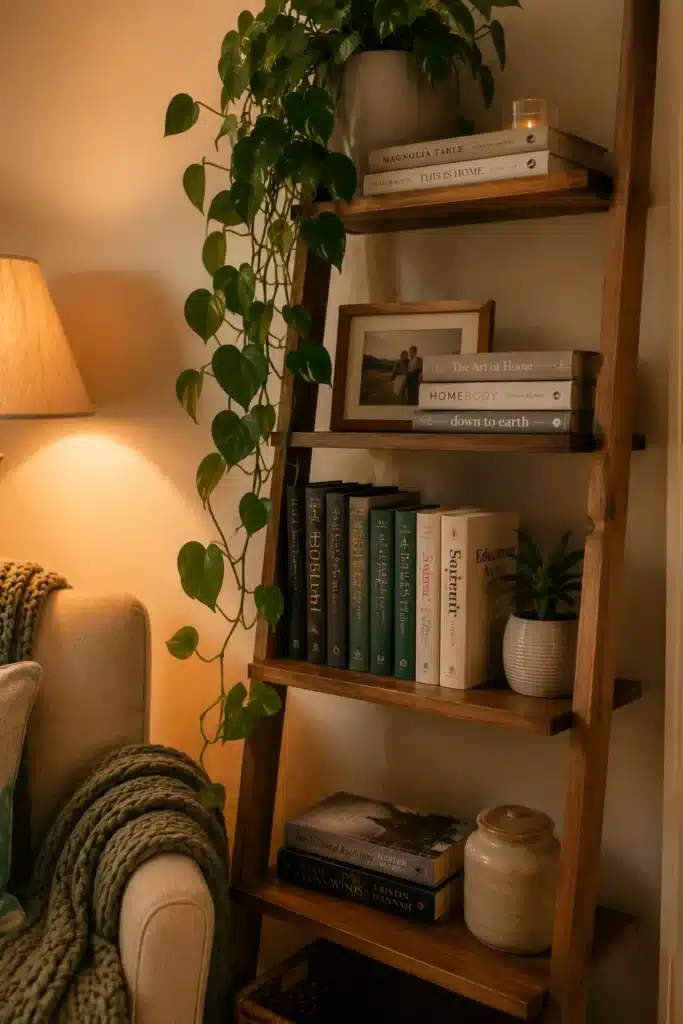
I use a narrow, leaning ladder bookshelf that fits perfectly into tight spaces. Any tall, skinny shelving unit maximizes vertical storage. Keep heavy books on the bottom shelves and decor on the top — it balances the whole look.
You absolutely need a spot for your coffee
Nothing ruins a reading session like setting your hot tea on the floor and immediately knocking it over.
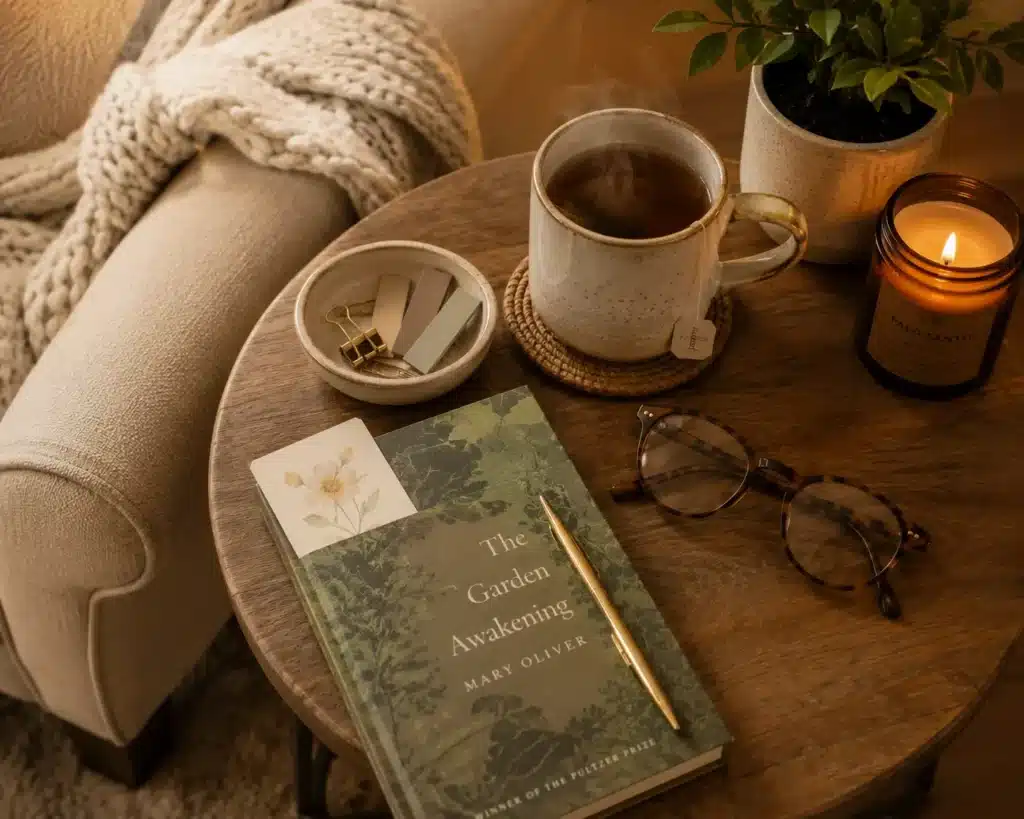
A cozy corner requires a dedicated landing zone for drinks and snacks. You don’t need a massive coffee table — just a small flat surface within arm’s reach. I found a tiny round side table at a thrift store for five dollars. It barely fits a mug and reading glasses, which is exactly the right size.
Even a sturdy wooden stool keeps your coffee safe and within reach.
Real talk: the dreaded clothes chair syndrome
A cozy corner chair acts like a magnet for worn clothes and clean laundry. I used to build these beautiful spaces just to cover them in sweaters two days later.
An empty chair in a bedroom practically begs you to throw a jacket on it. You have to fiercely protect this boundary if you want the space to work. I force myself to hang my clothes up immediately because moving a pile of jeans to read feels exhausting.
If you let it become a storage zone, you will simply stop reading in it. That defeats the whole purpose.
It’s the same principle I use in my small kitchen organization system — every item needs a home, and every space needs a purpose. Once you protect the boundary, it actually sticks.
Layering on the cozy corner decor
A bare chair and a lamp feel cold without some softening elements. Textures tell your brain that the space belongs to comfort and relaxation.
I drape a heavy, chunky knit throw blanket over the back of my chair permanently. A velvet lumbar pillow gives my lower back extra support while adding a pop of color. Mixing different fabrics like cotton, wool, and velvet makes the corner look incredibly inviting.
You don’t need expensive pieces — thrift stores and discount retailers have amazing options if you hunt a little.
Creating a mood with scent and sound
We focus entirely on how a room looks and completely forget how it smells. But scent triggers relaxation faster than almost any other sense.
I light a simple vanilla soy candle every single time I sit down to read. Having a signature scent for your corner builds a strong habit loop in your brain — when you smell vanilla, your body knows it’s reading time. Putting on a soft instrumental playlist in the background blocks out street noise.
Together, they create the full sensory experience that makes you actually want to sit down.
Making a reading nook on a budget actually work
Social media tries to convince us we need to spend thousands of dollars to achieve a specific aesthetic. Building a reading nook on a budget just requires looking at what you already have.
I stole a rug from my hallway and a plant from my kitchen to build my current setup. Apartment Therapy has great tips on repurposing what you own. Thrifting remains the absolute best way to find cheap side tables and lamps. You don’t need brand new matching furniture to create a beautiful, functional spot.
The best items in my corner cost me almost nothing because I was patient and creative with what was available.
Grounding the space with a small rug
Floating furniture in the middle of a room or corner often looks slightly awkward. A rug acts like a visual anchor, telling your eyes that this specific zone has a purpose.
I bought a small faux sheepskin rug and tossed it directly under the front legs of my chair. Having something soft under your bare feet makes reading so much better. A tiny two-by-three foot rug costs very little but dramatically changes the finished look.
Adding life with low-maintenance plants
A dead corner suddenly feels vibrant when you add green. I love the look of indoor jungles, but I frankly forget to water most of my plants. I stick to varieties that survive my occasional neglect without completely dying.
I placed a trailing pothos plant on the top shelf of my book rack. The vines hang down beautifully and soften the hard edges of wooden shelves. If you have zero natural light in your corner, Real Simple has guides on faux plants that look authentic.
Keeping your supplies easily accessible
Getting up to find a pen or a highlighter completely breaks the spell of a good chapter. I used to lose my favorite bookmarks constantly and end up using torn pieces of mail.
I keep a small ceramic bowl on my side table to hold my page flags, pens, and lip balm. Tossing my reading glasses in that specific bowl means I never hunt for them. Having everything you need sitting right there makes the experience seamless.
Embracing the imperfect aesthetic
Perfectionism ruins the fun of creating a home that actually serves you. Your corner will get messy. Your blankets will look rumpled. Coffee rings might stain the table.
A space that looks deeply lived-in always feels warmer than a pristine showroom. Let your books stack up unevenly. Don’t worry about matching your pillows perfectly. A cozy reading corner should reflect your actual life and your personal tastes.
The only thing that truly matters is how the space makes you feel when you sit down.
Giving yourself permission to just rest
We live in a culture that praises constant hustle and views sitting still as a failure. Taking the time to build a space dedicated entirely to sitting feels wonderfully rebellious.
You deserve a quiet spot to retreat to when the world feels loud. I spend fifteen minutes in my chair every morning before checking my phone. This 15-minute morning ritual changed how my entire day unfolds — and it started with claiming this space for myself.
You really don’t have to earn your rest. You just have to make space for it.
What book are you currently trying to finish? Leave a comment below — and go pick a corner of your house to claim for yourself today. You deserve it.
Frequently asked questions about cozy reading corners
How do you make a cozy reading corner in a small space?
Focus on vertical space instead of floor space. Use a tall, narrow bookshelf, hang string lights on the wall, and choose a chair or cushion that fits snugly in the corner. A small rug grounds the space visually. Even three feet of wall space is enough.
What’s the best seating for a reading corner?
Comfort is everything. An upholstered armchair with good back support is ideal, but floor cushions, accent chairs, or even a window seat work too. Test seating by sitting in it for at least 15 minutes before committing to it.
What lighting is best for reading?
Soft, warm lighting (amber or warm white bulbs) is essential. A floor lamp positioned to shine directly on your book prevents eye strain. Add string lights or a small table lamp for ambient mood lighting that makes the space feel cozy.
How much does it cost to create a reading corner?
You can build one for under $100 by thrifting furniture and repurposing items you already own. A used chair ($20-40), side table ($10-20), lamp ($15-30), and rug ($20-30) from thrift stores total less than you’d spend on one meal out.
What should I include in a reading corner setup?
A comfortable seat, warm lighting, a small table for drinks, a bookshelf for current reads, soft textures (blankets, pillows), a rug to ground the space, and a candle or plant for atmosphere. That’s the complete setup.