Table of Contents
Quick answer: the garage organization ideas that actually hold up long-term all do two things — they get items up off the floor onto walls or the ceiling, and they group by how often you reach for something rather than by category alone. None of it requires a built-in cabinet system. Below are 15 specific, budget-friendly ideas that stay organized past the first month, plus the layout logic that makes them work together.
Why Garages Fall Apart Faster Than Other Storage Spaces
A garage has a problem no closet has: it’s the only room in the house with no built-in storage at all. Closets come with shelves and a rod. Kitchens come with cabinets. A garage is just four walls and a floor, so everything — tools, seasonal bins, bikes, the lawnmower — competes for the one type of storage that’s free: floor space. And floor space disappears fast.
That’s also why garages don’t drift into mess slowly the way a junk drawer does. They get reorganized once, usually before a move or a big cleanout, and then collapse within a season because nothing was actually mounted to a wall. Anything sitting on the floor eventually gets something stacked on top of it, and the whole layout disappears under “I’ll deal with it later.”
How Many Zones Your Garage Actually Needs
Most garages function fine with four zones: a tools zone (hand tools, small hardware), a seasonal zone (holiday decor, off-season sports gear), a vehicle-adjacent zone (bikes, ladders, things that need to move in and out), and a workbench zone if you do any projects at all. Trying to create more than four often means you’re sub-dividing categories that don’t need it — and more zones means more decisions every time you put something away.
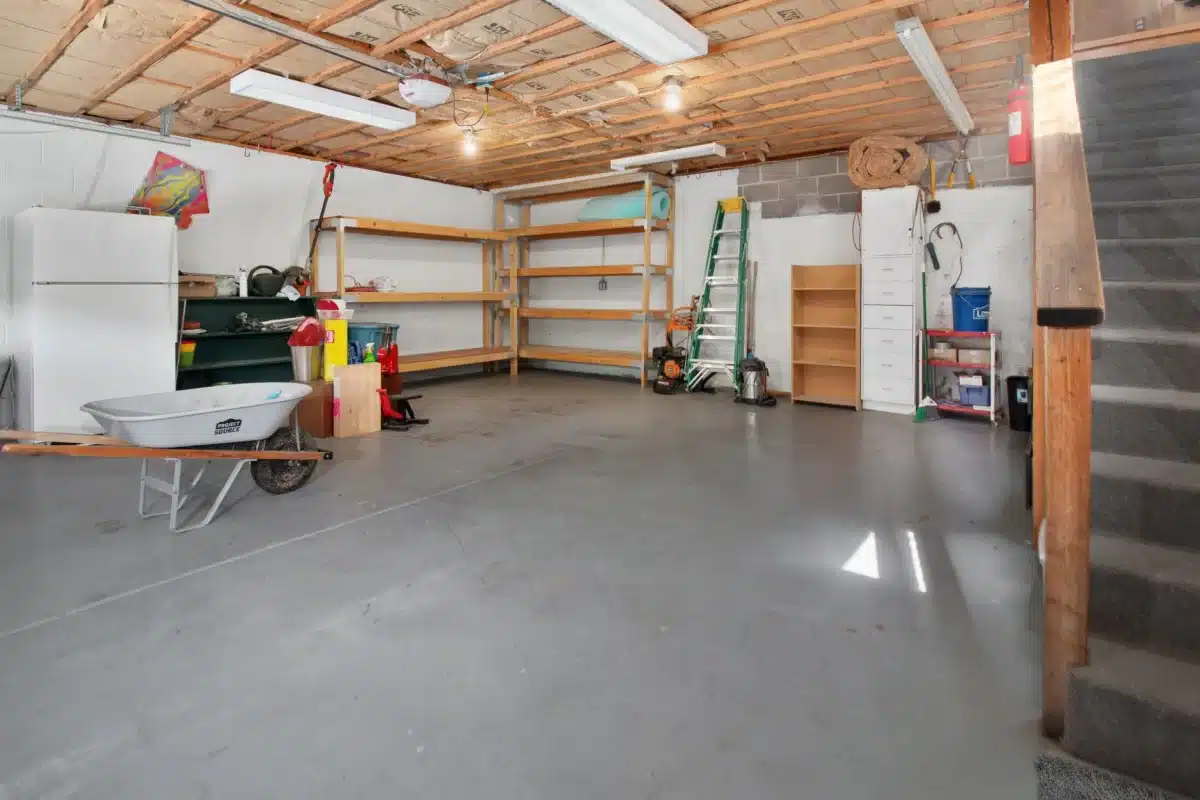
15 Garage Organization Ideas That Actually Work on a Budget
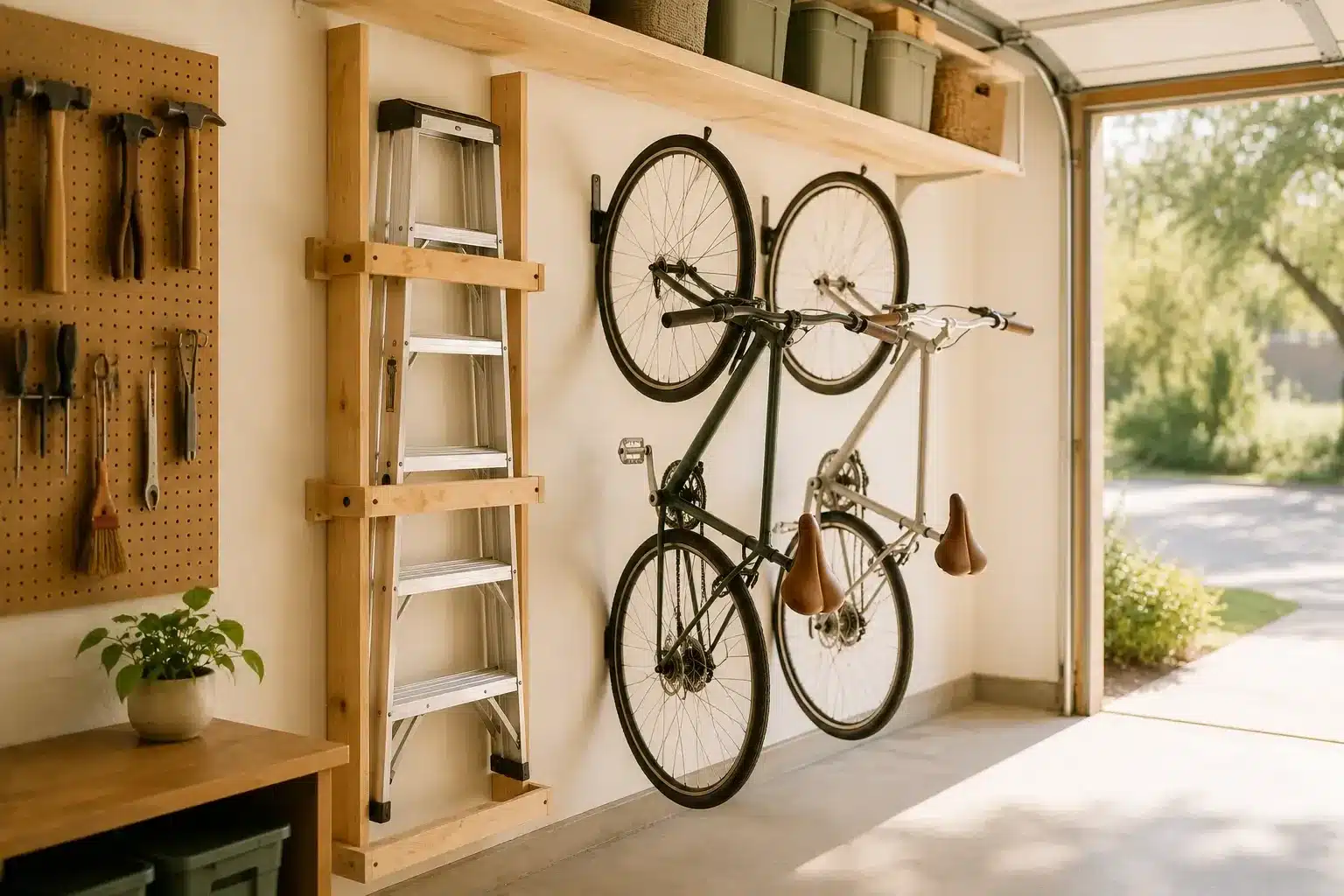
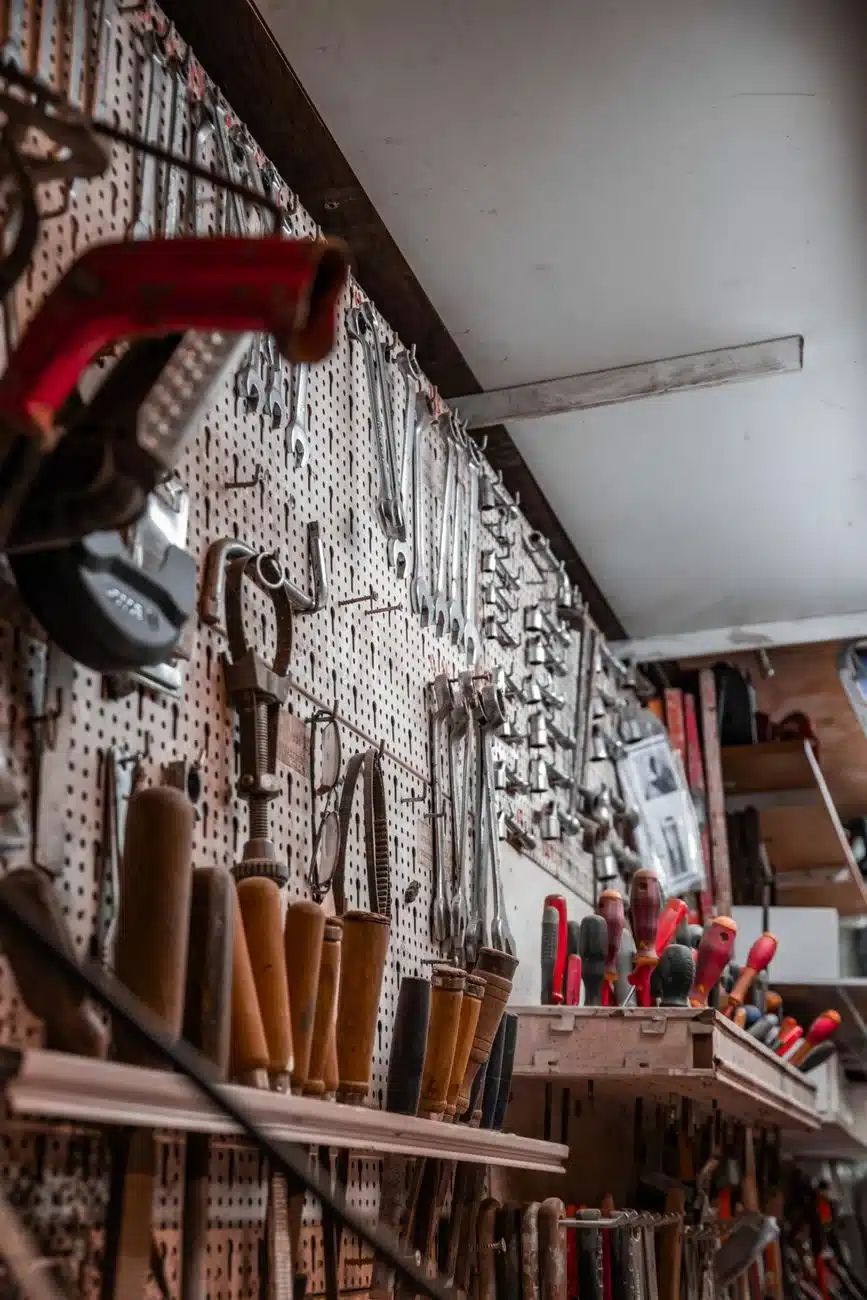
- Mount a pegboard before buying anything else. A 4×8 sheet ($20–30) plus a hook kit ($15–20) holds more hand tools than any cabinet twice the price, because every tool stays visible — you’re not opening drawers to find a tape measure.
- Hang bikes by the wheel, not the frame. A single wall hook ($15–25) per bike clears floor space instantly and stops bikes from leaning into each other and scratching paint.
- Put ladders on a wall rack, never leaning in a corner. A leaned ladder takes up roughly six square feet of usable floor; a wall rack ($30–40) reclaims all of it and stops the ladder from sliding when you’re not looking.
- Use stackable clear bins for seasonal-only items. Holiday lights and off-season gear only need to be visible twice a year — clear bins ($25–40 for a set of four) mean you’re not opening every box to find the right one.
- Add a magnetic strip near the workbench. Screwdrivers, wrenches, and utility knives ($10–15 for the strip) stop disappearing into drawer chaos and stay exactly where your hand expects them.
- Install one floating shelf above the workbench. A single shelf ($25–35 with brackets) for the supplies you reach for constantly — sandpaper, tape, fasteners — keeps the actual work surface clear instead of becoming another flat space that collects clutter.
- Store garden tools upright, never leaning against a wall. A simple tool rack ($15–25) keeps shovels and rakes from sliding down and tripping someone the moment the garage door opens.
- Use a rolling cart instead of a fixed cabinet if your budget is tight. A used rolling cart ($40–60 secondhand) gives you drawer-style organization for small parts and can move with you if you ever relocate — a built-in cabinet can’t.
- Reserve the ceiling for things you touch twice a year. A basic joist-mounted rack ($40–70) is the right spot for camping gear or holiday bins specifically because reaching it should feel like a small chore — that friction keeps rarely-used items from creeping back onto the floor.
- Paint the lower third of the walls a light, washable color. A $20–30 can of paint makes the whole space read as “organized” even on a messier week, and a washable finish means scuffs wipe off instead of becoming permanent.
- Corral cords and hoses with tension rods. Two horizontal rods ($10 each) mounted at hip height stop extension cords from becoming a tangled pile on the floor — loop them over the rod instead of coiling them on a hook that slips.
- Designate one shelf as the charging station. Cordless drill batteries and phone chargers scatter unless they have one fixed spot with a power strip — this costs nothing beyond a strip you likely already own.
- Repurpose an old bookshelf instead of buying new shelving. A bookshelf from inside the house (free) holds bins and small boxes just as well as anything sold specifically for garages.
- Label every shelf edge, not just the bins. A label on the shelf itself means whoever puts something away — not just whoever organized it — knows exactly where it belongs.
- Keep a small bin for trash and recycling right inside the door. Without one, broken items get set down “to deal with later” and never leave — a $15–20 bin means they can be tossed the moment you notice them.
A Simple Wall-by-Wall System
If you’re starting from a fully cluttered garage, this layout holds up well in practice: the wall nearest your workbench gets the pegboard and magnetic strip for daily-use tools, the wall opposite gets bike hooks and the ladder rack since those items move in and out most, the back wall gets shelving for seasonal clear bins (lowest priority, so it’s fine if it’s the wall you see least), and the ceiling is reserved only for things you’d genuinely forget existed if they weren’t slightly inconvenient to reach. The logic — frequency of use determines distance from the door — works regardless of your garage’s exact dimensions.
Mistakes That Undo Garage Organization Fast
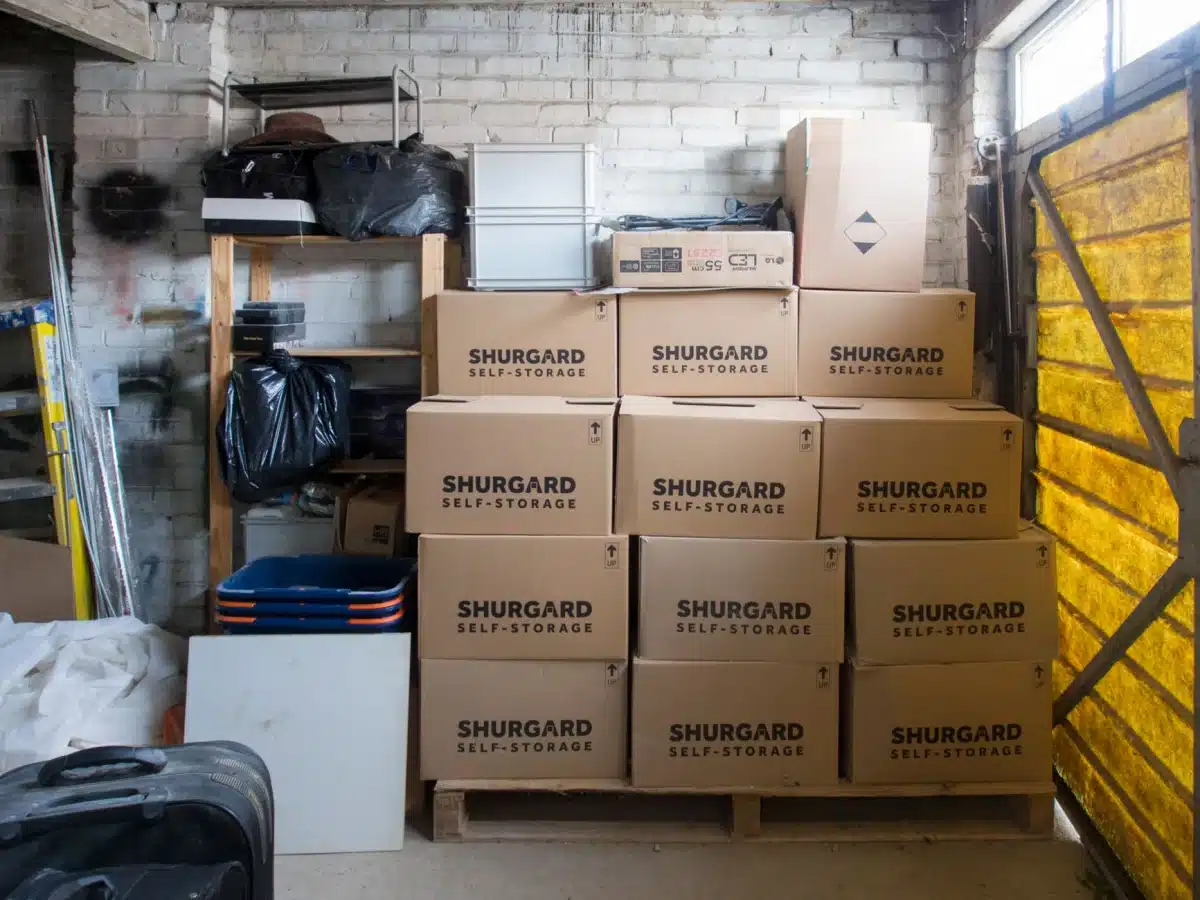
- Buying storage before editing what you own. The same mistake that undoes every organizing project — you end up buying bins sized for things you should have donated instead.
- Stacking bins more than three high. Past three, getting to the bottom bin means unstacking everything else first, so it simply stops happening.
- Leaving anything directly on the floor “temporarily.” Temporary floor items are the single most common starting point for a garage sliding back into clutter — they become permanent the moment something else gets stacked on top.
- Skipping labels because you’ll remember. You will, for a few weeks. Everyone else in the house never had the system in their head to begin with.
Real Talk:
Our garage stayed perfectly organized for about three weeks after I did all of this, and then my husband came home with a new lawn edger and just set it down in the middle of the floor because there wasn’t an obvious spot for it yet. That’s when I learned the system needs one open hook or one empty shelf for “new stuff,” on purpose — otherwise anything that doesn’t already have a home ends up right back on the floor.
Once your garage walls are doing the work, the same frequency-based logic applies to closets and pantries too. If you’re tackling more than one space, our free decluttering checklist generator lets you build a room-specific list before you start, and our guide to choosing the right number of storage bins applies just as well to garage shelving as it does to closets.
According to The Spruce’s garage organization guidance, wall-mounted storage consistently outperforms floor-based bins for long-term upkeep, which lines up with the wall-by-wall approach above.