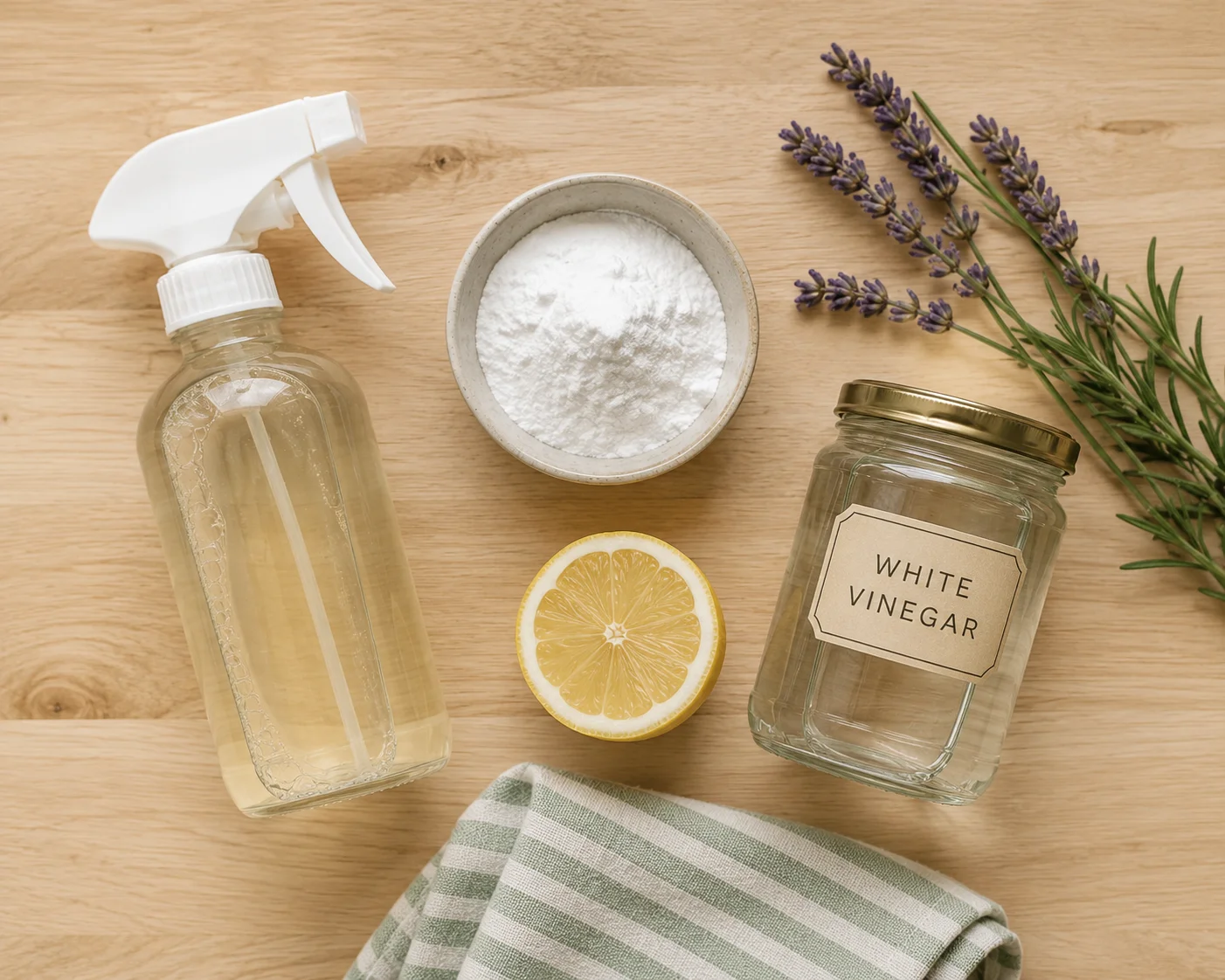
I spent years buying cleaning products I didn’t understand, in bottles I couldn’t read, that cost more than they should. Then I started making my own and realized two things: it’s genuinely easy, and most commercial cleaners are doing the same basic chemistry with a markup and a scent.
These natural cleaning products use ingredients you likely already have — white vinegar, baking soda, castile soap, and a few essential oils if you want them. They’re effective, cheap, and contain nothing you can’t pronounce.
One honest caveat first: natural doesn’t automatically mean better for every job. For disinfecting (killing germs, not just cleaning) — particularly in bathrooms or when someone is sick — commercial disinfectants or a diluted bleach solution work more reliably. These recipes are for everyday cleaning, not for medical-grade disinfection.
Table of Contents
The Four Ingredients That Do Most of the Work
White distilled vinegar cuts grease, dissolves mineral deposits, and deodorizes. Mild acid. Don’t use on marble, granite, or natural stone — it will etch the surface.
Baking soda is a mild abrasive and deodorizer. It neutralizes odors rather than masking them. Combine with vinegar carefully — they neutralize each other when mixed directly, so use them sequentially (baking soda first, vinegar to activate), not combined in a bottle.
Castile soap is a plant-based concentrated soap. A small amount cuts grease and lifts dirt. Dilutes significantly — most recipes use 1 part soap to 10–20 parts water.
Essential oils are optional. Tea tree has some antimicrobial properties. Lavender, lemon, eucalyptus add scent. Not necessary for cleaning effectiveness — they’re for preference.
All-Purpose Spray
This handles counters, stovetops, sinks, appliance exteriors, and most everyday surfaces.
Recipe:
- 1 part white vinegar
- 1 part water
- 15 drops essential oil (optional — lemon or tea tree work well)
Mix in a spray bottle. Shake before each use. Works on most kitchen and bathroom surfaces. Do not use on natural stone, marble, or granite.
For a slightly more powerful version that also cuts grease: add 1 teaspoon of castile soap per cup of liquid.
Bathroom Scrub
For sinks, tubs, tiles, and grout. The baking soda provides gentle abrasion without scratching.
Recipe:
- ½ cup baking soda
- Enough liquid castile soap to form a paste (about 2–3 tablespoons)
- 10 drops tea tree oil (optional)
- 10 drops lemon essential oil (optional)
Mix into a thick paste. Apply with a damp cloth or sponge, scrub, rinse thoroughly. Make fresh each time — it doesn’t store well as a wet paste. Alternatively, sprinkle dry baking soda onto a damp surface and scrub, then rinse.
Glass and Mirror Cleaner
This leaves glass streak-free without the blue chemicals. The rubbing alcohol (optional) helps it evaporate faster, which reduces streaks.
Recipe:
- 2 cups water
- ½ cup white vinegar
- ¼ cup rubbing alcohol, 70% concentration (optional)
Mix in a spray bottle. Spray on glass, wipe with a lint-free cloth or newspaper. Newspaper actually works better than paper towels for glass — it doesn’t leave fibres.
According to Good Housekeeping, a vinegar-water solution is as effective as commercial glass cleaners for removing smudges and fingerprints on standard glass surfaces.
Drain Deodorizer
Not a drain cleaner — for actual clogs, use a snake or a proper drain cleaner. This is for odor and minor buildup maintenance.
Recipe:
- ½ cup baking soda, poured down the drain
- ½ cup white vinegar, poured immediately after
- Wait 15 minutes while it fizzes
- Flush with boiling or very hot water
The fizzing reaction between baking soda and vinegar loosens minor residue and deodorizes. Do this once a month as maintenance, not as a fix for a slow drain.
Wood Surface Polish
For unsealed wood furniture — not lacquered or painted surfaces. This conditions and cleans at the same time.
Recipe:
- ¼ cup olive oil
- 2 tablespoons white vinegar
- 10 drops lemon essential oil (optional)
Mix well (it will separate — shake before each use). Apply a small amount to a cloth, rub into wood in the direction of the grain, buff with a dry cloth. A little goes a long way — too much leaves a greasy film.
Fabric Freshener
For sofas, curtains, car seats, mattresses — anything you can’t easily wash but wants freshening.
Recipe:
- 1 cup water
- 1 tablespoon baking soda
- 10–15 drops essential oil (lavender, eucalyptus, or citrus work well)
Dissolve the baking soda in the water first (it won’t dissolve completely — shake before each spray). Add essential oil. Spray lightly on fabric from about 30cm away. Allow to dry fully before use. This deodorizes rather than disinfects — for a sick room, use a proper disinfectant.
Real talk: Natural cleaning products are genuinely good for daily maintenance. They’re not always better than commercial products for heavy-duty jobs — a serious stovetop degreaser or a toilet bowl cleaner handles things vinegar and baking soda can’t. Keep a few targeted commercial products for the hard jobs, use these for everything else. That’s the sensible version.
Start with the all-purpose spray. Make one bottle, use it for two weeks, see how it works for your surfaces. If you like it, make the glass cleaner next. You don’t need all seven — pick the two or three that match what you actually clean.
Frequently Asked Questions
Do natural cleaning products actually work?
For everyday cleaning — removing dirt, grease, odors, and general grime — yes. White vinegar and castile soap handle most household cleaning effectively. For disinfecting (killing bacteria and viruses), commercial disinfectants are more reliable, particularly in bathrooms and kitchens when someone is ill.
Is white vinegar safe to use on all surfaces?
No. White vinegar is acidic and will etch marble, granite, natural stone, and some metal finishes. It’s safe on glass, most sealed counters, stainless steel, porcelain, and plastic. When in doubt, test a small inconspicuous area first.
Can I mix baking soda and vinegar in a spray bottle?
No — they neutralize each other on contact and lose their cleaning effectiveness. Use them sequentially: baking soda first as a scrub or deodorizer, then vinegar to activate or as a separate rinse. Never store them combined in a sealed bottle.
What can I use instead of castile soap?
A small amount of regular dish soap works as a substitute in most recipes. It’s not plant-based but functionally similar for cleaning purposes. Use about the same quantity.
How long do homemade cleaners last?
Vinegar-water sprays last several months if stored in a cool, dark place. Recipes containing soap should be used within 2–4 weeks — soap can go rancid. The baking soda bathroom scrub is best made fresh each time. Label everything with the date made.
Are natural cleaners safe around children and pets?
Generally safer than many commercial products, but still keep out of reach of children. Vinegar and castile soap are non-toxic. Essential oils can be irritating to pets — use sparingly or skip entirely if you have cats, who are particularly sensitive. Allow surfaces to dry before children or pets contact them.
What is the best natural disinfectant?
For genuine disinfection, distilled white vinegar has some antimicrobial properties but doesn’t meet the technical threshold for a “disinfectant.” Hydrogen peroxide (3% solution) is more effective. Tea tree oil has some antimicrobial properties but in the concentrations practical for home use, isn’t equivalent to commercial disinfectants.
Can I use these recipes in a deep clean?
Yes — the all-purpose spray, bathroom scrub, glass cleaner, and drain deodorizer all feature in a full deep clean sequence. For the full kitchen deep clean method including where each product works best, this kitchen deep clean guide walks through the whole process.