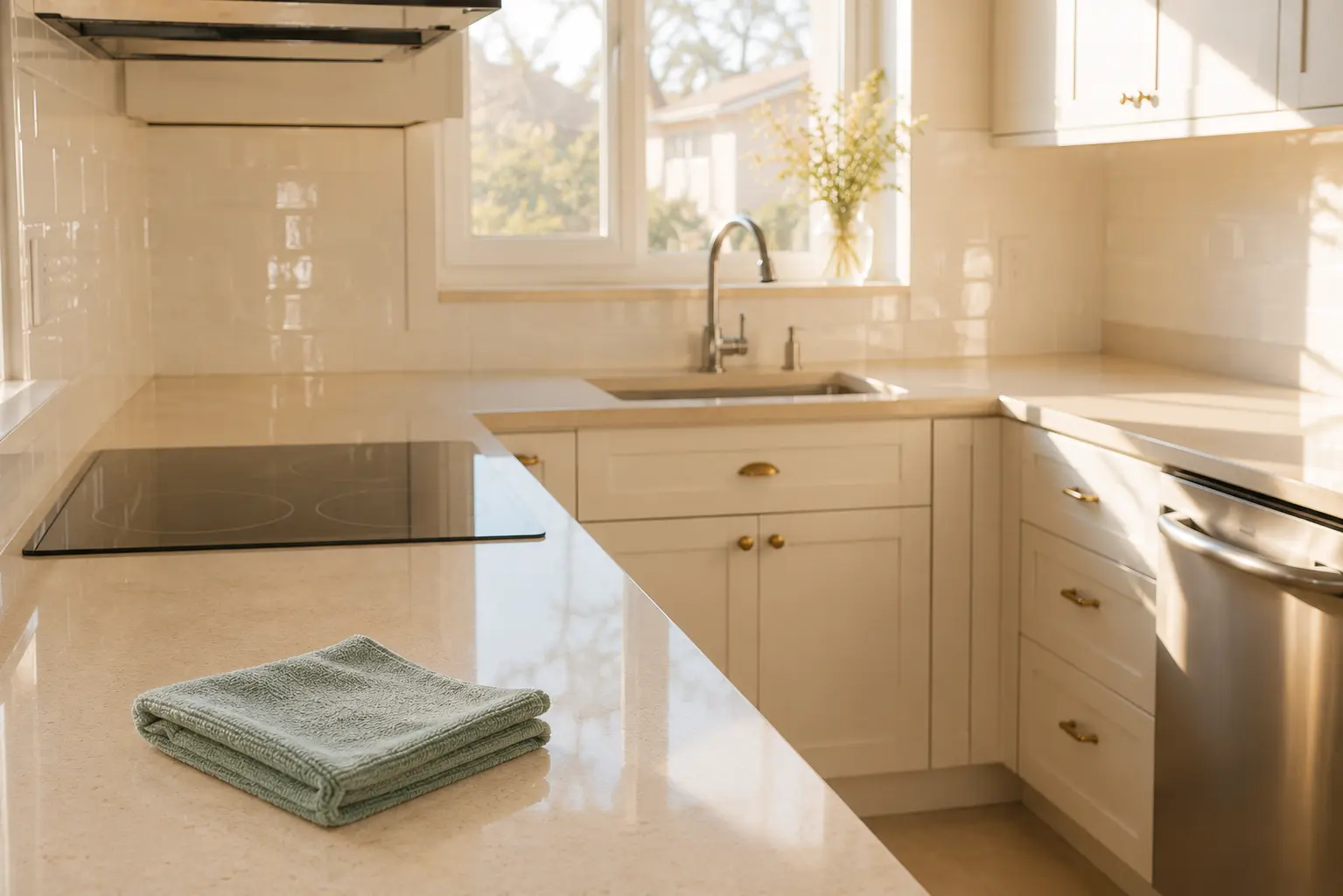
My kitchen gets cleaned in small ways every day — counters wiped, dishes done, a quick sweep. But there’s a different kind of clean that only happens when you actually deal with the stovetop grime, the cabinet smears, the inside of the microwave that you’ve been not-looking-at for two months.
That kind of clean doesn’t have to take a weekend. A proper deep clean kitchen session, done with a plan and in the right order, takes under an hour.
This is the exact sequence. Do it in order — the order matters.
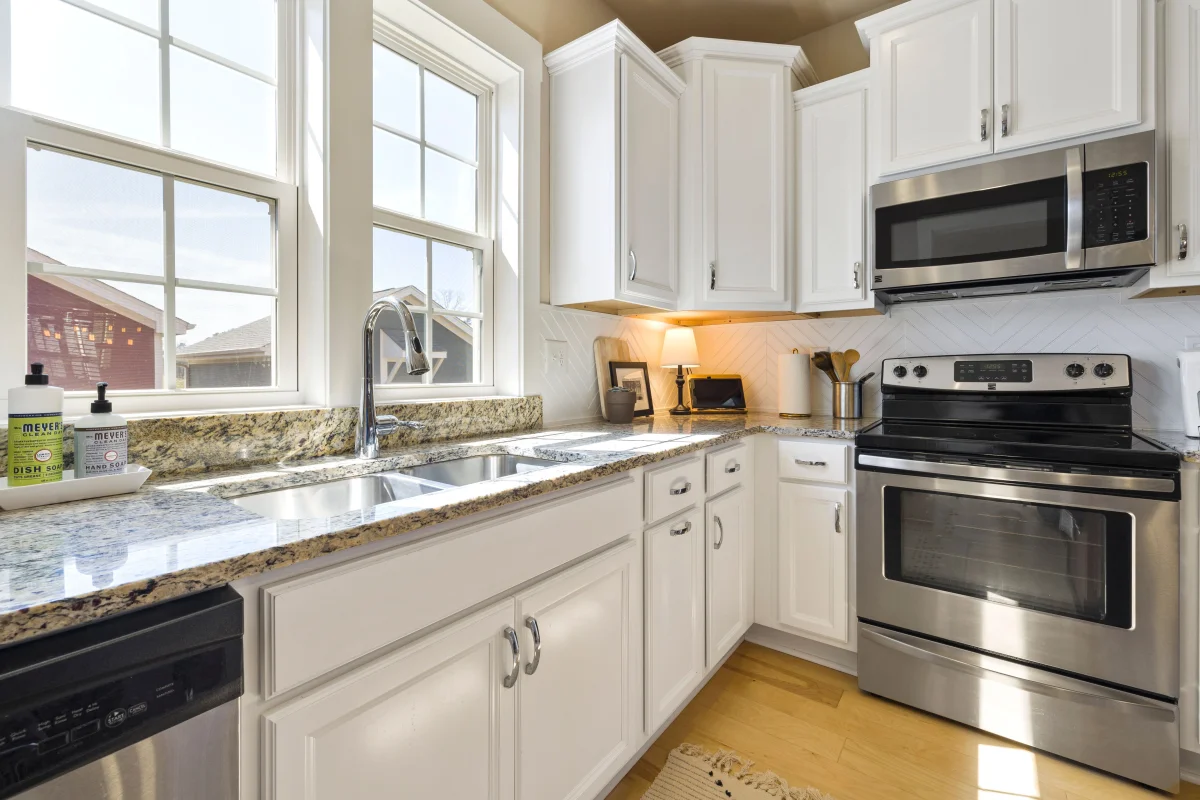
Before You Start: Set Up Your Supplies (3 Minutes)
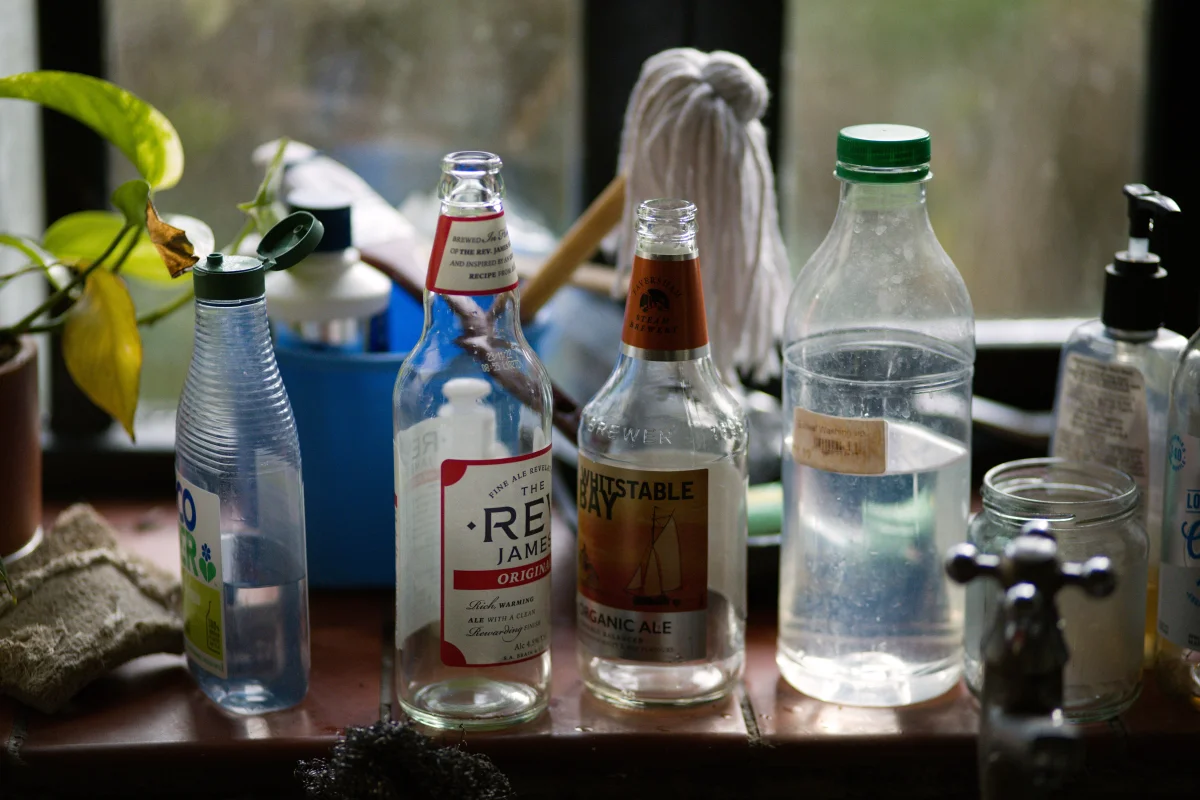
Pull everything out first so you’re not searching mid-clean. You need: an all-purpose spray, a degreaser (or dish soap for budget), microfibre cloths, a scrubbing sponge, a bin liner, and a mop or floor cloth. That’s it.
Fill your sink with hot soapy water now — you’ll use it to soak things as you go. Set a timer for 55 minutes.
Step 1: Clear and Pre-Soak (Minutes 1–8)
Remove everything from the counters. Everything. Put it on the kitchen table or floor temporarily.
Drop your stovetop grates and burner caps (if gas) into the hot soapy sink water. Drop the microwave turntable plate in too. Let these soak while you work through the rest of the kitchen — by the time you get back to them, most of the grime will wipe right off.
Toss any obvious rubbish, expired items from the counter, and anything that doesn’t belong in the kitchen.
Step 2: Microwave and Small Appliances (Minutes 8–15)
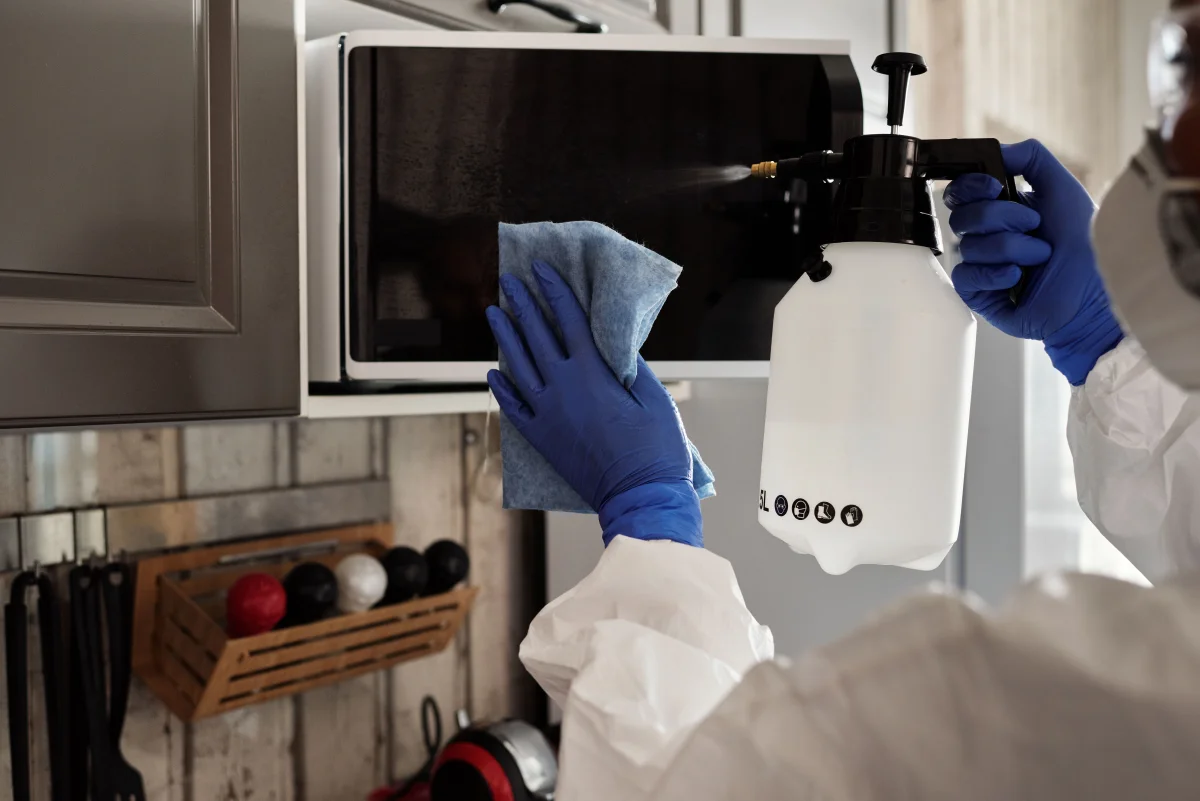
Microwave first while the stovetop parts are soaking. Put a bowl of water with a few drops of dish soap (or half a lemon) in the microwave and run it for 3 minutes. The steam loosens everything. Wipe inside with a cloth — it should come clean with minimal scrubbing.
While the microwave runs: wipe the outside of the kettle, toaster, coffee maker. Not deep-cleaning these — just the exterior smear and residue. That’s what you see every day.
Step 3: Stovetop (Minutes 15–25)
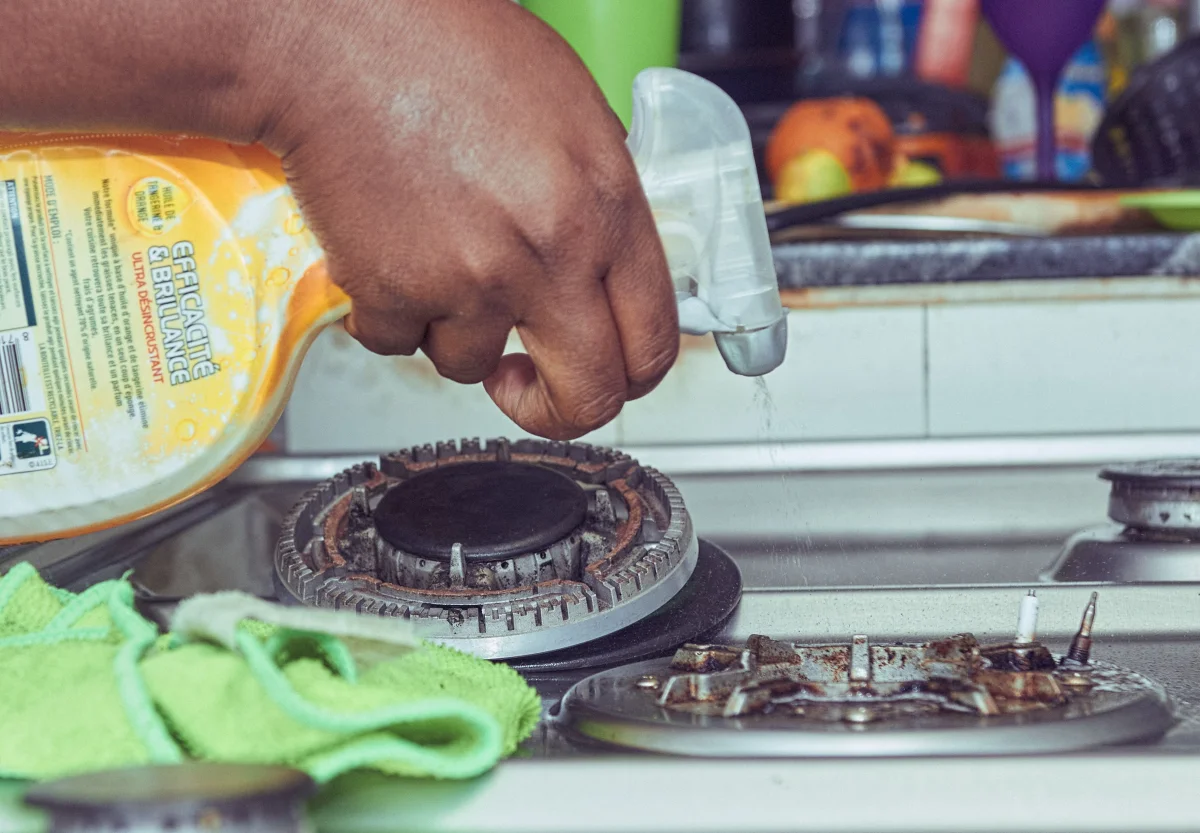
The grates have been soaking for 15 minutes by now. Pull them out and scrub — most of the cooked-on residue will come off easily. Wipe them dry and set aside.
Spray the stovetop surface with degreaser. Let it sit for 2 minutes (don’t skip this). Then wipe. For baked-on spots, a non-scratch scrubber and a bit of patience. The degreaser does the work if you give it time.
According to Good Housekeeping, letting a degreaser dwell for 2–3 minutes before wiping removes 80% of the elbow grease required — the chemistry does the work, not your arm.
Step 4: Counters and Sink (Minutes 25–33)
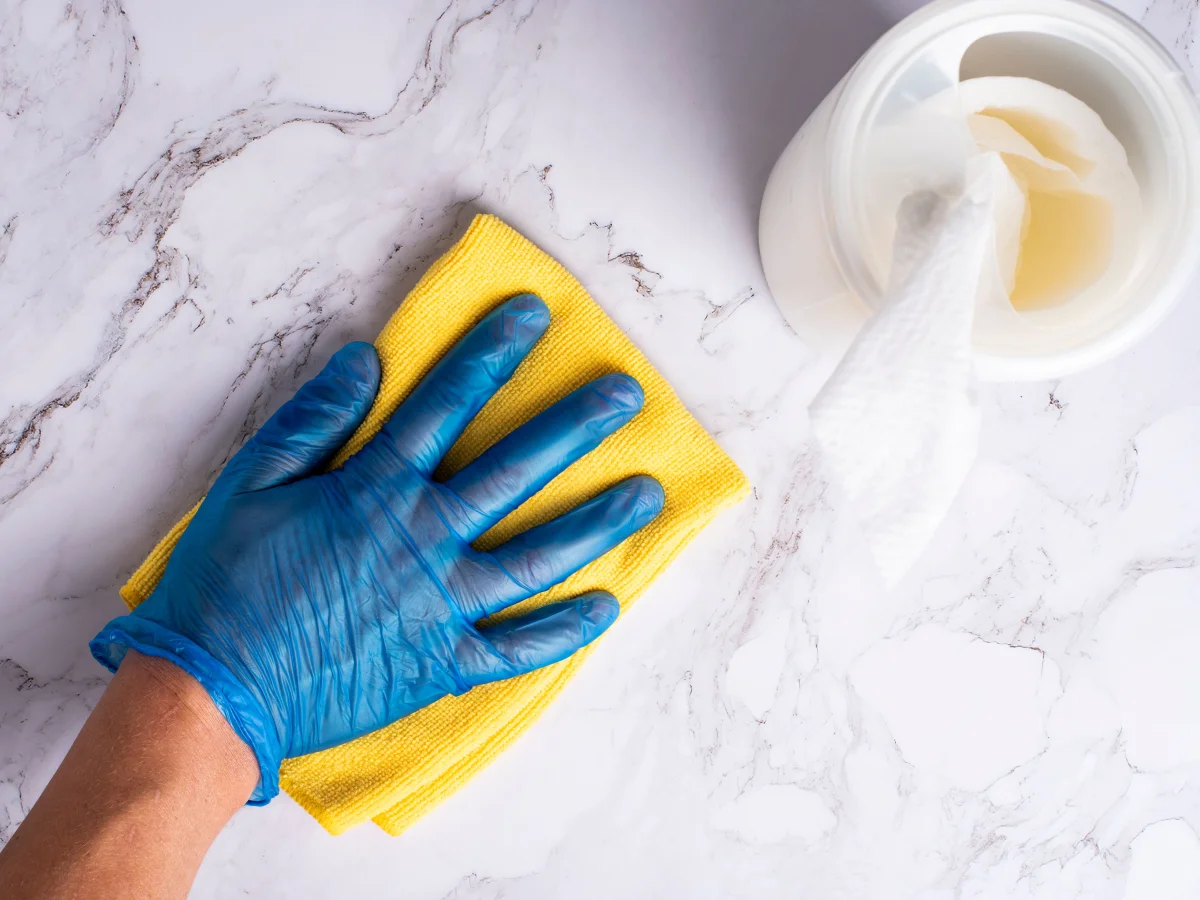
Spray and wipe all the cleared counter surfaces. Get into the corners and the edges near the backsplash — these collect grease and residue that daily wipes miss.
Sink: spray with all-purpose, scrub the basin and taps with a sponge. Run hot water through the drain. Wipe the taps dry — this removes water spots that make clean sinks look dirty.
Now everything goes back on the counter — but only what belongs there. Anything that wandered onto the counter and doesn’t live there goes to its actual home. A deep clean kitchen session is the best time to reset what lives on the counter permanently. For a full system on making kitchen surfaces work harder, these kitchen organization ideas complement this exactly.
Step 5: Cabinet Fronts and Handles (Minutes 33–40)
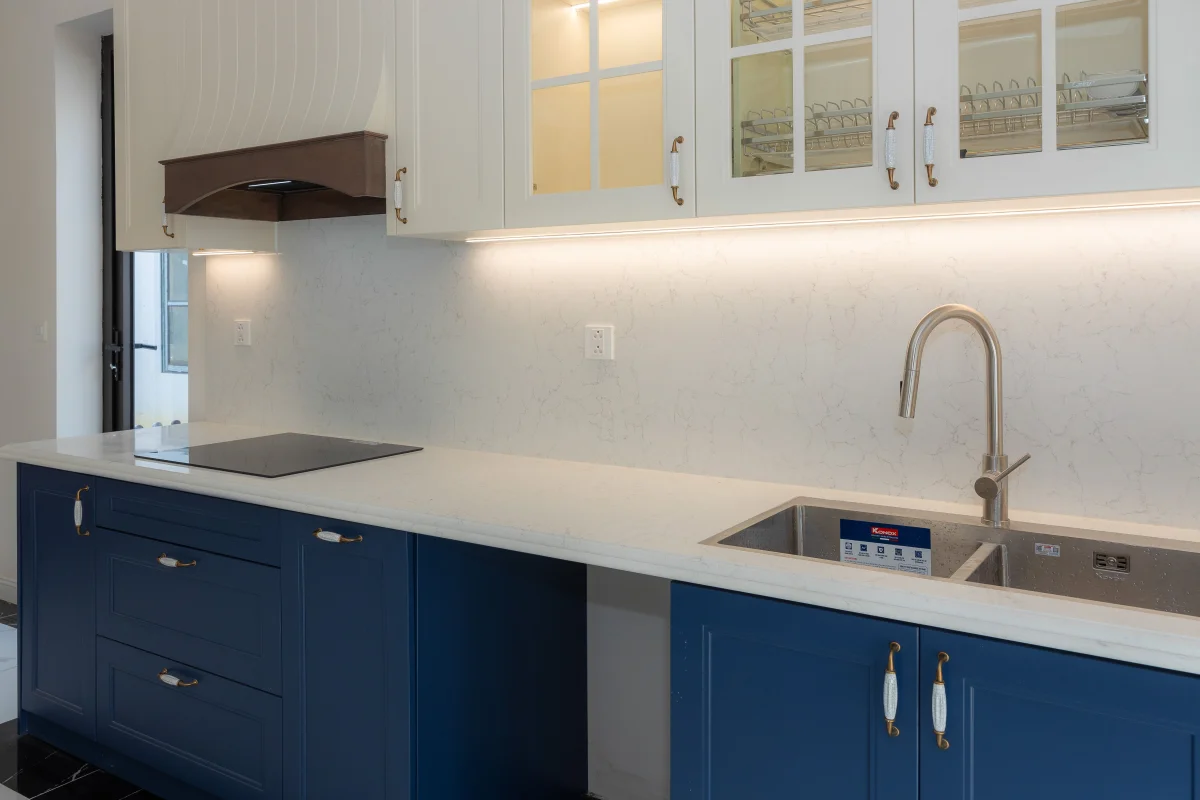
Cabinet fronts collect fingerprints, grease, and the kind of grime that accumulates so gradually you stop noticing it. Spray and wipe each front — especially around the handles and the lower cabinets near the stove.
Don’t deep-clean inside the cabinets today. That’s a separate project. Today is surfaces only.
Step 6: Fridge Exterior and Handles (Minutes 40–44)
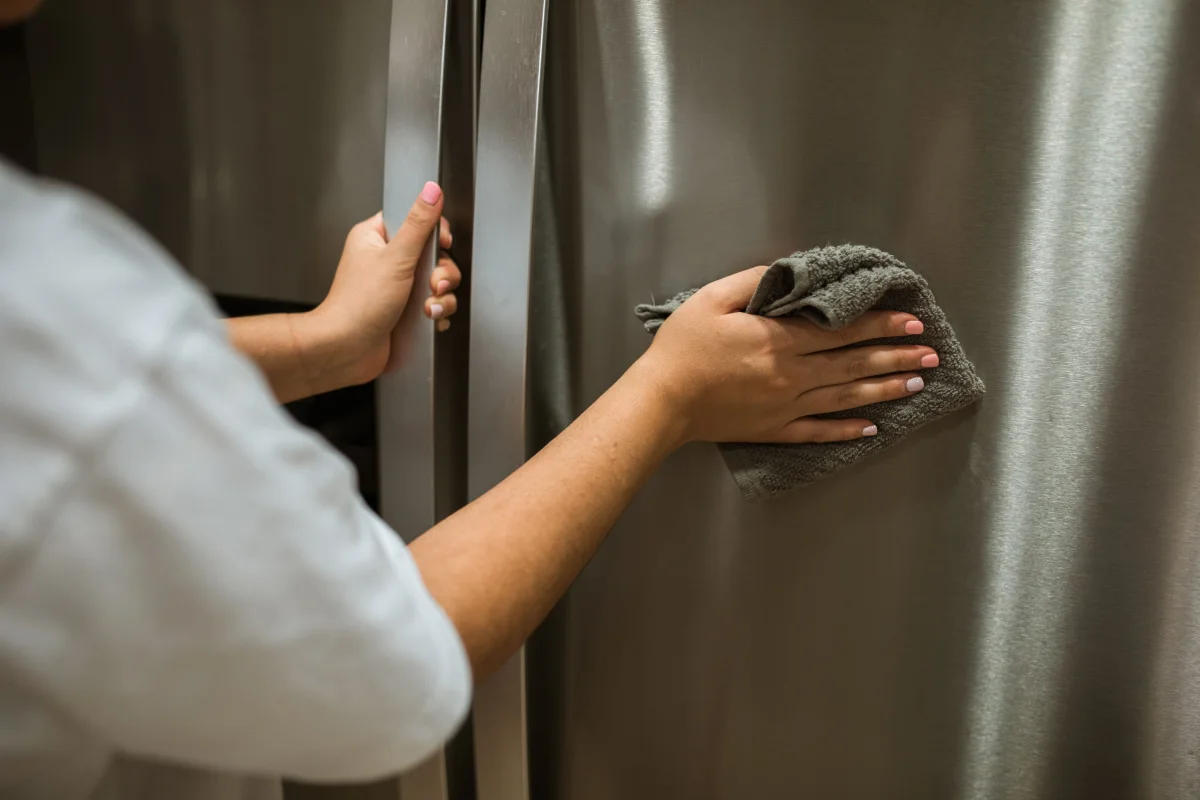
Wipe the fridge exterior: doors, handles, the top if accessible. The handle is the most-touched surface in the kitchen — it carries more residue than most people realize.
If you have five extra minutes: pull the fridge slightly forward and sweep behind it. This is where a surprising amount of debris accumulates and it takes about 90 seconds once the fridge is moved.
Step 7: Floor (Minutes 44–55)
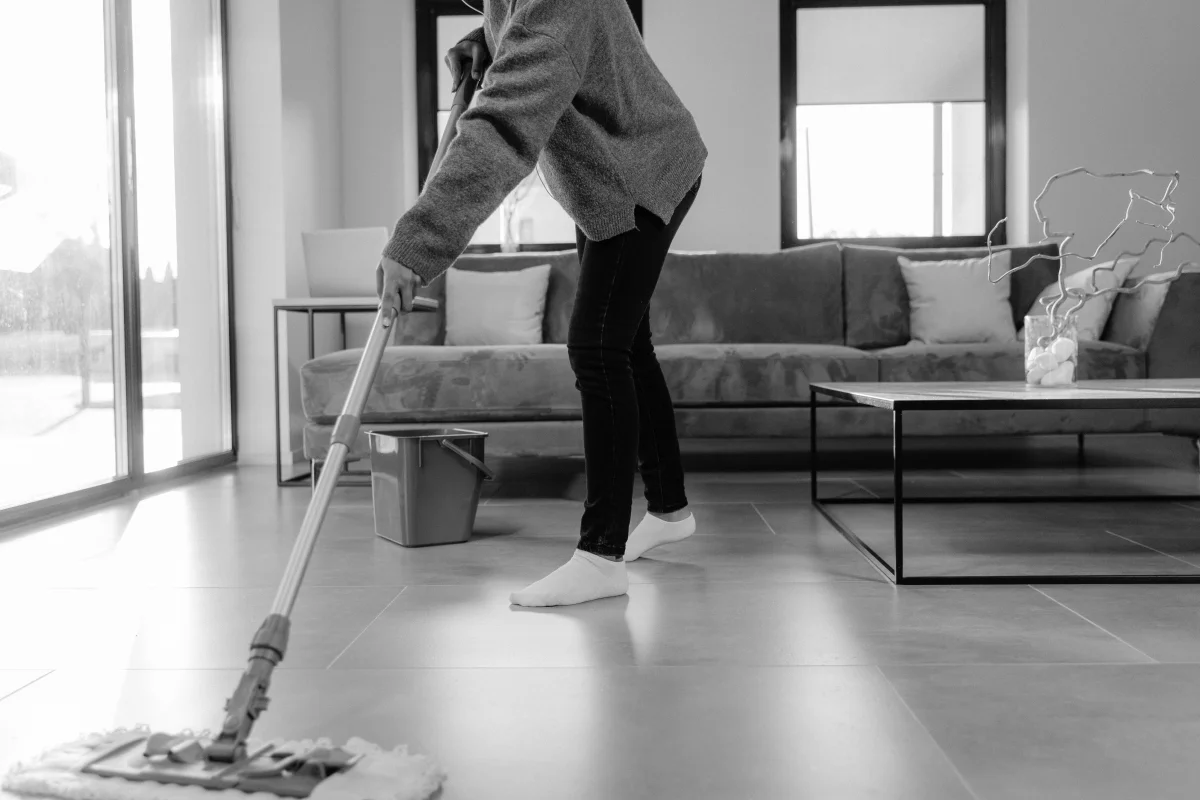
Sweep or vacuum first — this is non-negotiable before mopping. Mopping over crumbs moves them around rather than removing them.
Mop with warm water and a small amount of floor cleaner. Work from the far corner toward the door so you’re not walking on what you’ve just cleaned. The floor is last because everything you’ve cleaned above it has dropped debris down.
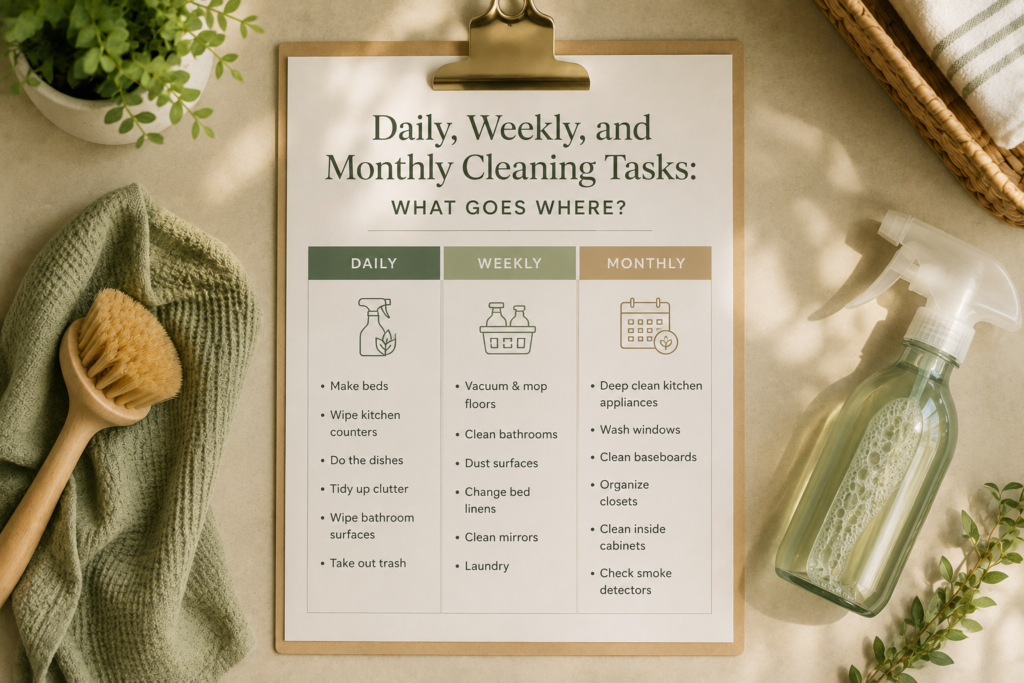
This is also why the order in this guide matters: working top to bottom, soaking things while you clean other things, leaving the floor for last. Pair this with a daily cleaning routine and you’ll find deep cleans only need to happen once a month rather than once a week.
Real talk: The reason kitchen deep cleans feel overwhelming is that most people try to do everything at once without a sequence. You end up going back and forth, losing track of what’s done, and the whole thing takes two hours instead of one. The order in this guide — soak first, top to bottom, floor last — is what makes it fast.
Set the timer, follow the order, and you’ll be done before an hour. The first time is the hardest. The second time takes forty minutes.
Frequently Asked Questions
How do you deep clean a kitchen in under an hour?
Work in order: pre-soak grates and turntable, clean microwave while things soak, do stovetop, then counters and sink, then cabinet fronts, fridge exterior, and finally floor. The sequence matters — working top-to-bottom and soaking while you clean elsewhere is what keeps it under an hour.
How often should you deep clean your kitchen?
Once a month is realistic for most households. If you maintain a daily cleaning routine (counters wiped, dishes done, quick sweep), monthly deep cleans stay manageable. Without daily maintenance, weekly deep cleans become necessary.
What is the best kitchen degreaser?
A purpose-made kitchen degreaser spray works best for stovetops and cabinet fronts. For a budget option, a solution of hot water and dish soap with a few drops of white vinegar cuts most kitchen grease effectively. The key is dwell time — spray, wait 2–3 minutes, then wipe.
What order should you clean a kitchen?
Top to bottom, soaking first. Pre-soak stovetop grates. Then: microwave, stovetop, counters, sink, cabinet fronts, fridge exterior, floor. This order means you’re not re-dirtying surfaces you’ve already cleaned.
How do you clean a greasy stovetop?
Remove grates and soak in hot soapy water for at least 10 minutes. Spray the stovetop surface with degreaser and let it dwell for 2–3 minutes before wiping. For baked-on residue, a non-scratch scrubber with more dwell time. The soak and dwell time do the work — not scrubbing.
How do you clean the inside of a microwave easily?
Place a bowl of water with a few drops of dish soap or half a lemon inside. Run on high for 3 minutes. The steam loosens all residue. Wipe with a cloth immediately while still warm — everything comes off with almost no effort.
What should I not forget when deep cleaning a kitchen?
Cabinet handles and fronts (high-touch, high-grease), behind the fridge (surprising debris), the microwave turntable (remove and wash properly), inside the sink drain, and the floor area under the stove. These are the spots daily cleaning misses.
How do I keep my kitchen clean after deep cleaning it?
A 10-minute daily reset — dishes done, counters wiped, floor swept — maintains a deep-cleaned kitchen between sessions. Combined with a weekly cleaning schedule, monthly deep cleans become genuinely quick rather than daunting.