I have started and abandoned approximately eleven cleaning routines in my adult life. A Monday bathroom schedule. A weekly zone system. The one where you spend fifteen minutes per room per day. I did each of them for about two weeks before the whole thing quietly collapsed and I went back to cleaning reactively when things got bad enough.
The problem wasn’t motivation. It was that every system I tried was designed for a version of me that didn’t actually exist — someone with consistent energy, a predictable schedule, and no bad weeks.
A cleaning routine that sticks looks different from one that sounds good. Here’s what I eventually figured out.
Why Cleaning Routines Fail

Most cleaning routines fail for one of three reasons. They’re too ambitious — designed for a best-case day, not an average one. They’re too rigid — missing one day feels like failing the whole system. Or they rely entirely on motivation, which is the least reliable resource a person has.
A routine that sticks has to survive a bad week. It has to be so small on hard days that skipping it feels worse than doing it. And it has to produce a result you can feel, not just a task you can check off.
Start Smaller Than Makes Sense
The instinct when building a routine is to design the ideal version — everything you’d do if you had unlimited time and energy. Resist this completely.
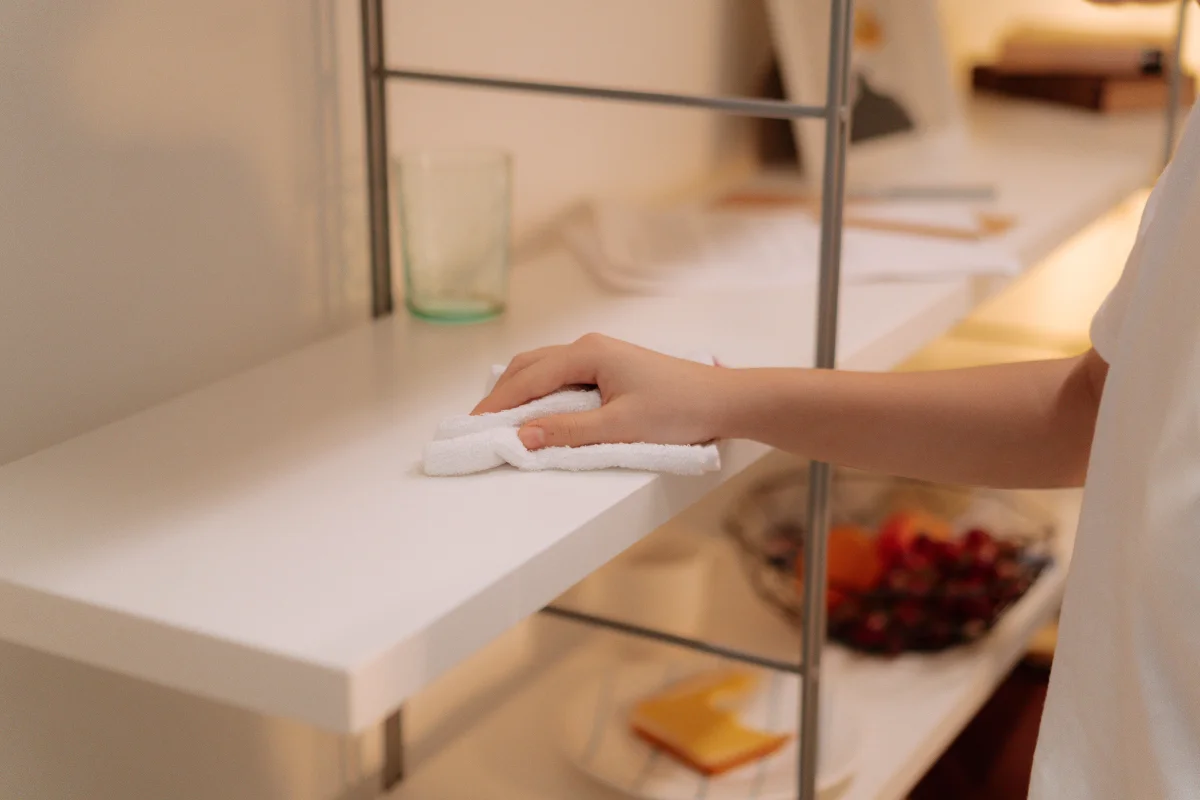
Start with the minimum viable routine: the absolute least you could do that still makes a difference. For most people that’s three things: dishes done before bed, counters wiped, bathroom sink wiped. That’s it. Five minutes. Do that every day for two weeks before adding anything.
According to The Spruce, the most common reason cleaning routines fail is starting with too much and burning out within the first ten days. Small and consistent beats thorough and abandoned every time.
Anchor Tasks to What You Already Do

The secret to habits that stick isn’t scheduling them — it’s anchoring them to something that already happens automatically. You don’t decide to brush your teeth. You do it because it comes after something else.
Cleaning anchors that work:
- Wipe the bathroom sink while your coffee brews
- Wipe kitchen counters right after dinner, before you sit down
- Run the dishwasher as the last thing before bed
- Wipe the stovetop while you wait for the kettle
- Sweep the kitchen floor after the last meal of the day
None of these require carving out dedicated cleaning time. They fill the gaps that already exist in your day.
The Weekly Layer
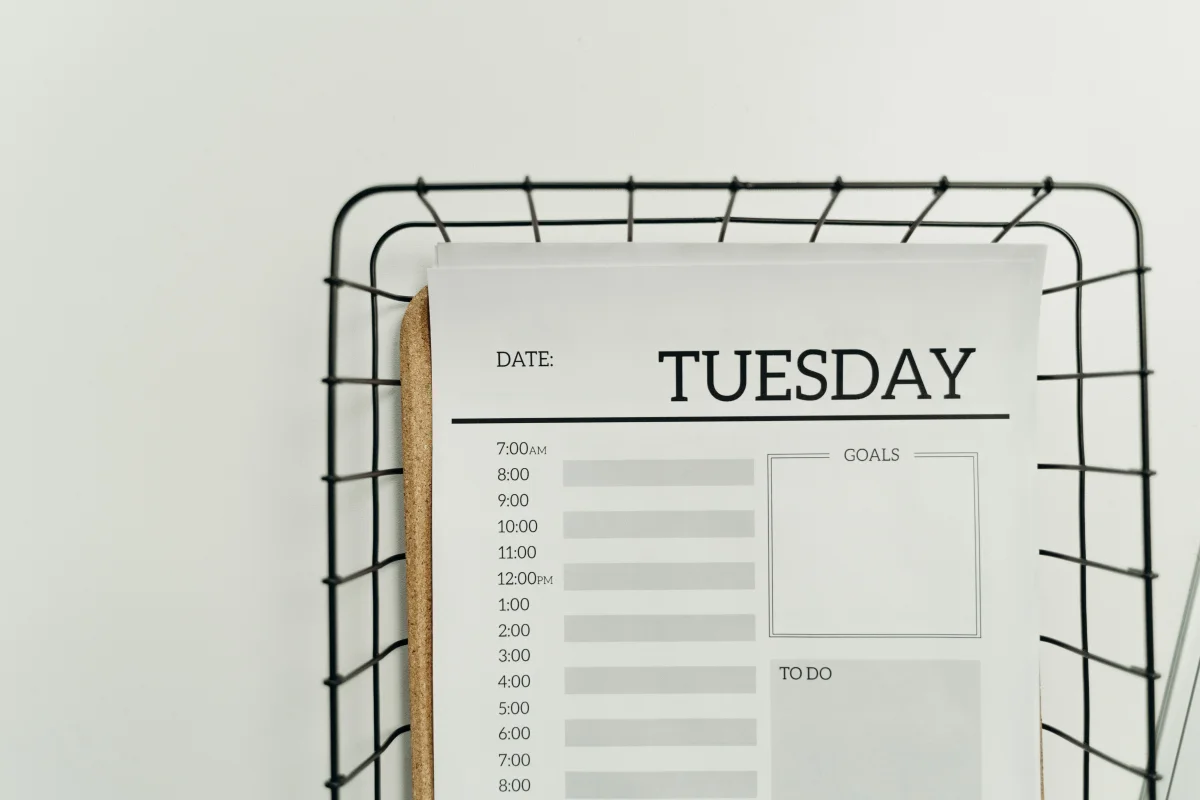
Once the daily anchors feel automatic — usually after two or three weeks — add one weekly task per day. Not a cleaning day. One task, one day.
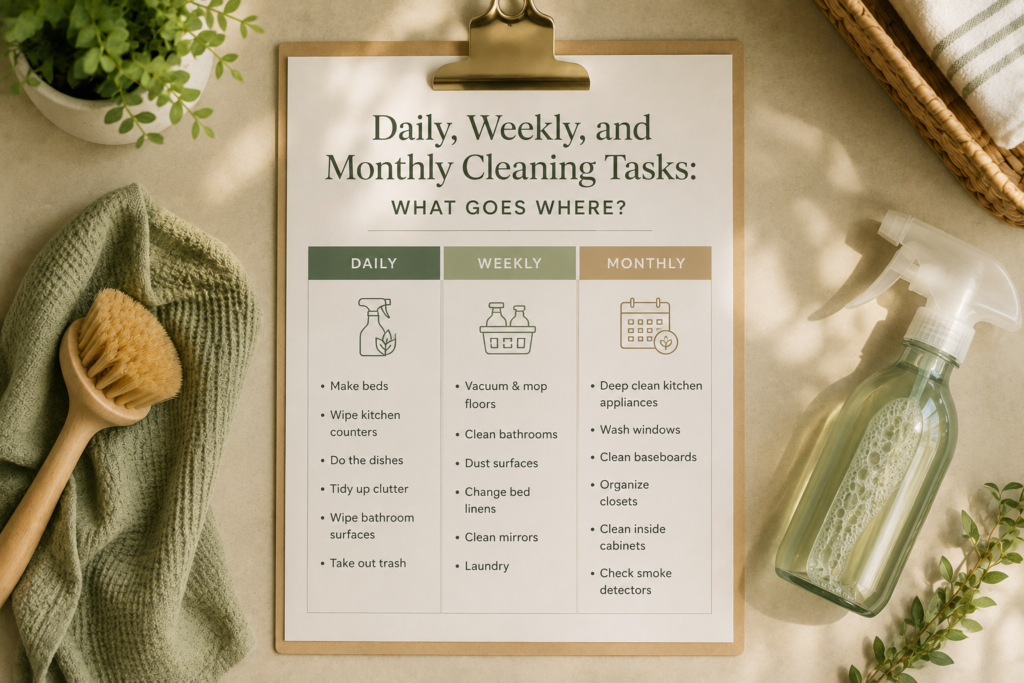
Monday: vacuum. Tuesday: bathroom. Wednesday: laundry. Thursday: floors. Friday: nothing (end of week, protect it). Saturday: whatever got skipped. Sunday: reset for the week.
This spreads the load so no single session feels like a project. It also means missing one day doesn’t break the system — each task has its own day and missing Monday’s vacuum doesn’t affect Tuesday’s bathroom. For a printable version of this kind of schedule, the free cleaning schedule printable lets you customize it to your actual week.
Design for Your Worst Week, Not Your Best

Every routine needs a “bad week” version. A stripped-down set of non-negotiables for when life gets in the way. For me it’s three things: dishes, bathroom sink, bed made. That’s it. Everything else can wait.
Knowing the minimum means you never feel like you’ve completely abandoned the routine. You did the minimum. That’s not failing — that’s a smaller version of the same system. The full routine resumes when things normalize, not from scratch after a guilt-driven break.
Make the Friction Disappear
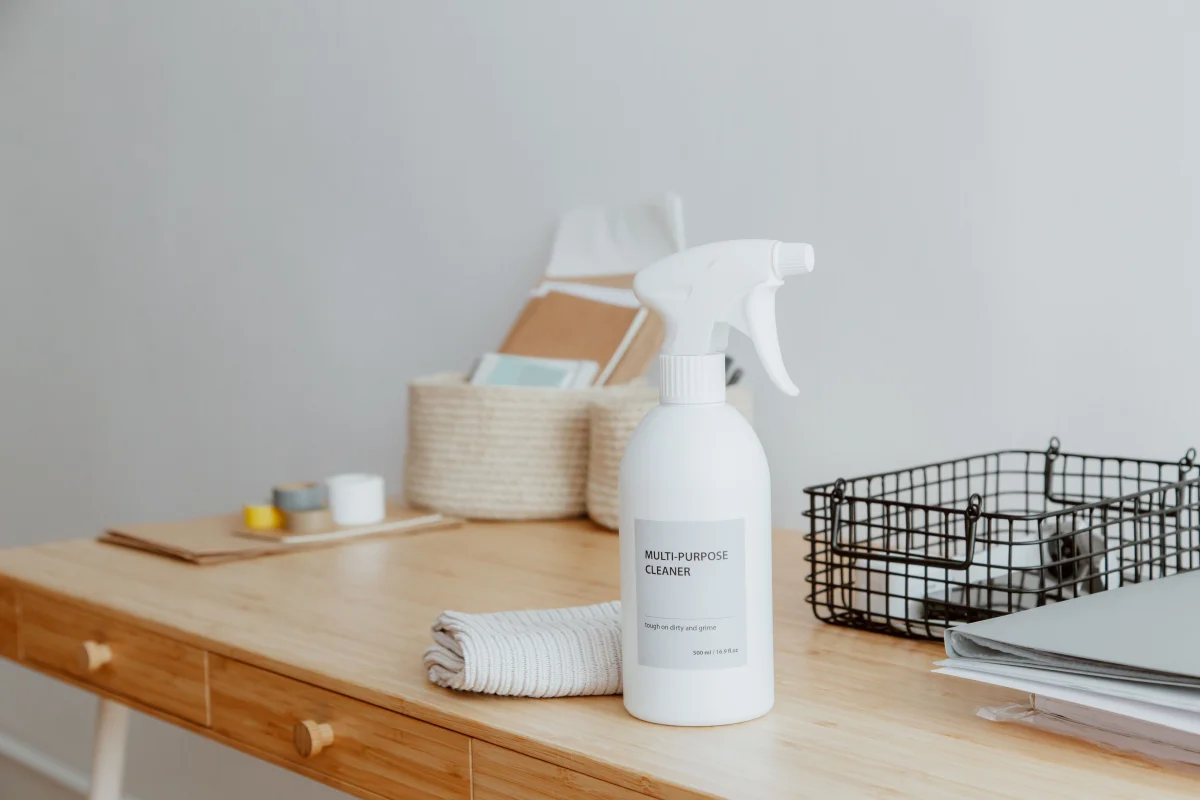
If doing a task requires finding the supplies first, you won’t do it. The cloth has to be where the task happens. The bathroom cleaner has to be under the bathroom sink, not in a utility room. The kitchen spray has to be on the counter or in the cabinet directly below where you use it.
A cleaning caddy for your most-used supplies is worth more than any complicated scheduling system. One grab, everything’s there, task done. The 15-minute daily routine only works because everything needed is in one place.
Track the Streak, Not the Score
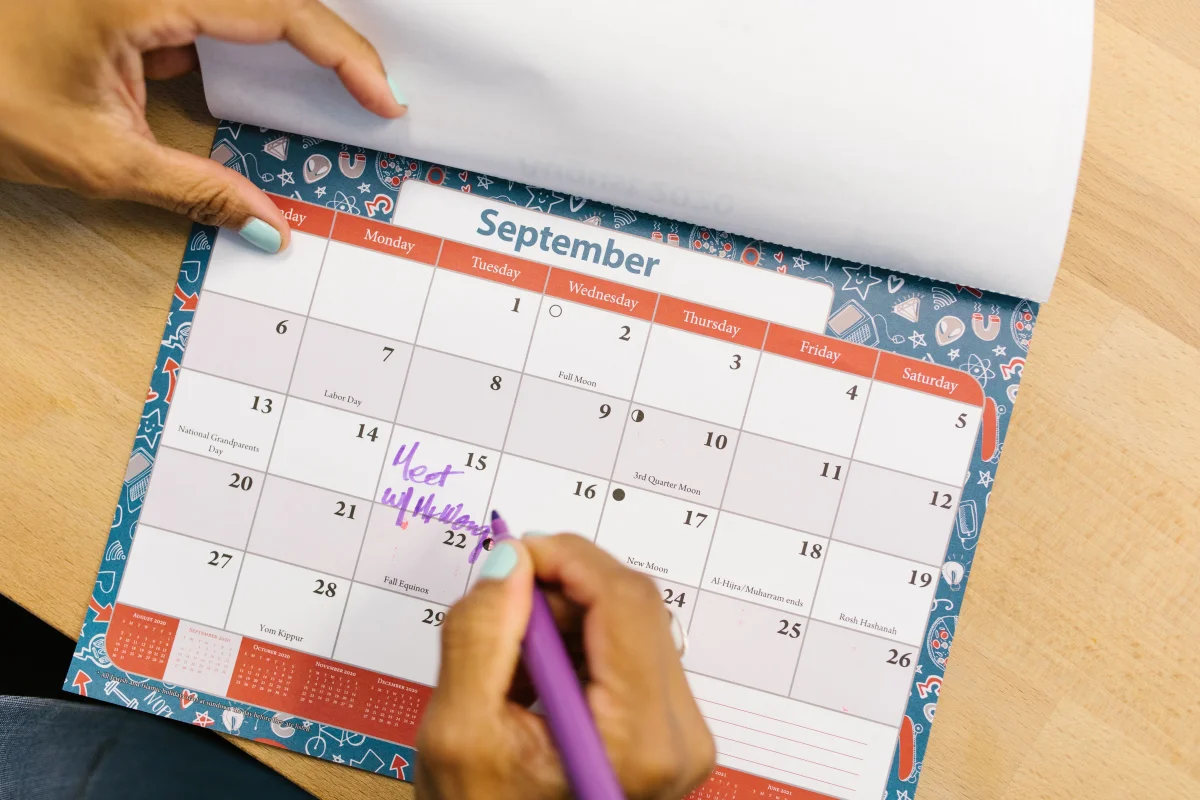
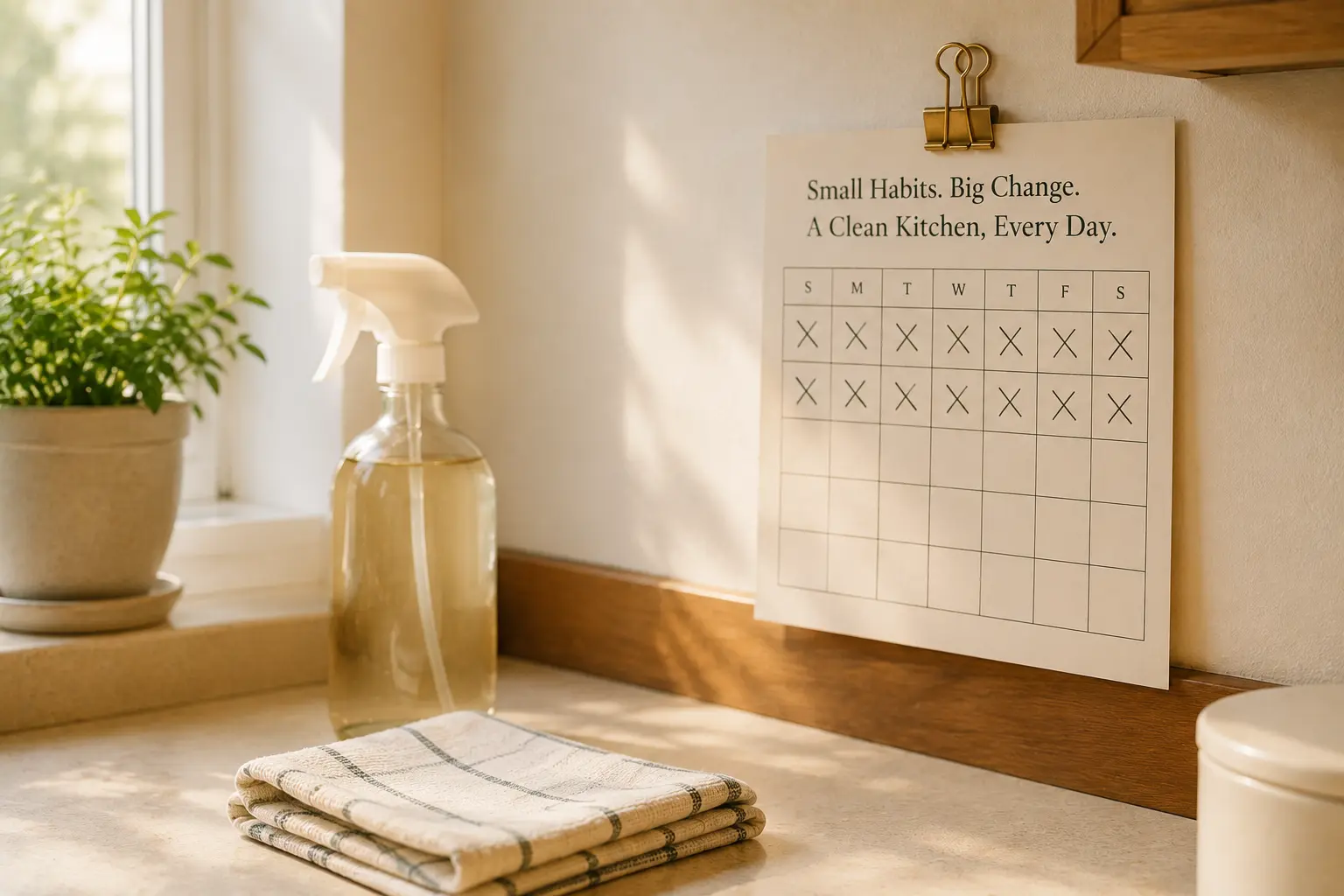
A simple tally — a calendar with an X on days you did the routine — is more motivating than any app or elaborate system. You don’t want to break the chain. That psychological pull is real and it’s free.
When you miss a day, the rule is: never miss two in a row. One missed day is a rest. Two missed days is a pattern. The chain doesn’t have to be perfect. It just has to keep going.
Real talk: The cleaning routine you’ll actually stick to is probably uglier than the one you want. It’s not seven zones and a rotating deep-clean schedule. It’s three daily anchors, one weekly task per day, and a bad-week minimum. Not impressive. Just real.
Start tonight. Do the dishes, wipe the counter, wipe the bathroom sink. Put an X on today’s date. Do it again tomorrow. That’s the whole beginning.
Frequently Asked Questions
How do I build a cleaning routine I will actually stick to?
Start smaller than feels productive. Pick three daily tasks that anchor to things you already do. Add weekly tasks only after the daily habits feel automatic. Design the routine for your worst week, not your best. Keep supplies where the tasks happen.
Why do I keep failing at cleaning routines?
Most routines fail because they’re too ambitious for an average day, too rigid to survive a bad week, or rely on motivation rather than habit anchors. A routine that sticks is small enough to do when tired, attached to existing habits, and has a minimum version for hard weeks.
How long does it take to build a cleaning habit?
Research suggests 21–66 days depending on the complexity of the habit. For simple cleaning anchors (wipe counter while coffee brews), closer to 3 weeks. For a full weekly system, give it 6 weeks before deciding it isn’t working.
What should a daily cleaning routine include?
At minimum: dishes done before bed, kitchen counters wiped, bathroom sink wiped. These three tasks take under 5 minutes and maintain a liveable home even when nothing else gets done. Add to this only after these three feel automatic.
How do I motivate myself to clean regularly?
Stop relying on motivation — it’s the wrong tool for routines. Anchor tasks to existing habits so they happen automatically. Track the streak with a simple calendar. Design the minimum version so bad days don’t break the chain. Motivation is for starting. Anchors are for continuing.
How do I clean my house when I have no time?
Fill existing gaps: wipe the sink while the coffee brews, wipe counters while the kettle boils, run the dishwasher before bed. These tasks fill 30–60 second windows that already exist. You’re not adding cleaning time — you’re just using transition moments differently.
How do I restart a cleaning routine after falling off?
Don’t try to catch up. Resume tomorrow as if it’s day one of the minimum version — just the three daily anchors. Don’t do a big cleaning session to compensate for missed days. Just start the small routine again and let the streak rebuild.
What is the most important room to keep clean?
The kitchen. It affects daily life most directly, it’s where food and health intersect, and a clean kitchen makes the rest of the home feel more manageable. After that: the bathroom you use every day. Everything else is secondary.