
I spent three hours cleaning my apartment once. Vacuumed everything, wiped all the surfaces, did the dishes, even cleaned behind the coffee maker. And when I was done, I stood in the middle of the living room and it still felt… cluttered. Full. Like there wasn’t enough air in the space.
If your home feels cluttered even right after you clean it, you’re not doing it wrong. You’re solving the wrong problem.
Cleaning and decluttering are two completely different things, and most of us treat them like they’re the same. Here’s the thing — a clean home with too much stuff in it will always feel cluttered. The mess might be tidier, but the feeling doesn’t go away.
This is what’s actually happening, and what to do about it.
Table of Contents
Cleaning Moves Dirt. Decluttering Removes Decisions.
When you clean, you maintain what you have. When you declutter, you question whether you should have it at all. Both matter. But if your home feels cluttered even on its cleanest day, cleaning more won’t solve it — you have too many things competing for space, attention, and surface area.
Think about it this way: a room with 40 items arranged perfectly still looks like 40 items. A room with 20 items looks calm. The cleaning makes the 40 items shine. But the math doesn’t change.
The good news? You don’t need to get rid of everything. You just need to get rid of enough — the things you’re keeping out of habit, guilt, or “just in case” thinking. According to Good Housekeeping, most people use only 20% of what they own on a regular basis.
The “Just Put It Away” Problem
Here’s the thing about putting things away: it only works if there’s actually a place for them to go. When your drawers are full, your shelves are packed, and your closet is at capacity, there’s nowhere for anything to land — so it stays on the counter, on the chair, on the floor.
This is why surfaces collect things. Not because you’re messy. Because you’ve run out of real storage capacity, and flat surfaces become overflow zones by default.
The test: walk through your home and count the flat surfaces. Now count how many are actually clear. If the answer is “most of them have something on them,” you’re not running out of discipline — you’re running out of space.
When Everything Has a Surface But Nothing Has a Home
A home feels settled when every item has a specific, intentional place. Not just a general zone — an actual spot. The scissors go in the second drawer. The phone charger goes on the nightstand. The extra batteries go in the box in the office closet.
When things don’t have homes, they wander. They end up on the coffee table, the kitchen counter, that chair in the bedroom that’s been holding clothes since February. This is how clutter accumulates even in relatively organized homes — not chaos, just a lot of homeless objects.
The fix isn’t more storage. It’s assigning fewer things actual homes, which means owning fewer things that need one. For a practical starting point, this bathroom storage post shows exactly how that logic plays out in one of the trickiest rooms in the house.
The Visual Weight of Too Much
Clutter isn’t always physical. It’s also visual. Too many colors, too many patterns, too many decorative objects on one shelf — all of it registers as noise to your brain, even when everything is technically clean and in its place.
This is why a room that’s objectively tidy can still feel exhausting to be in. If every surface has something on it, your eye never gets to rest. You walk in and your brain immediately starts processing all the information.
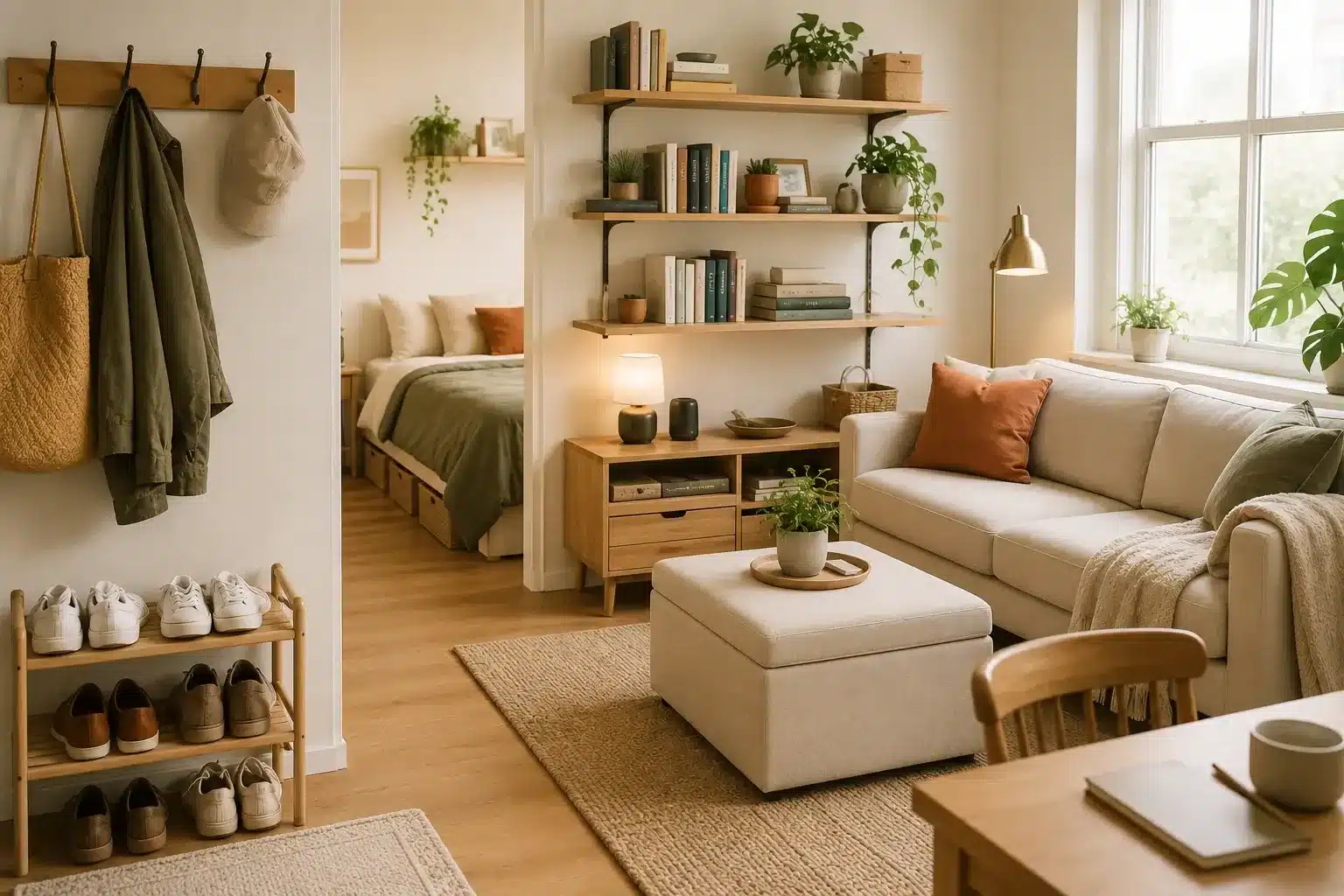
Honestly? The single most effective thing I did to make my home feel calmer was remove two-thirds of what was on my open shelves. Same furniture, same layout, same everything — just fewer objects. It felt like the room exhaled.
Why Storage Solutions Sometimes Make It Worse
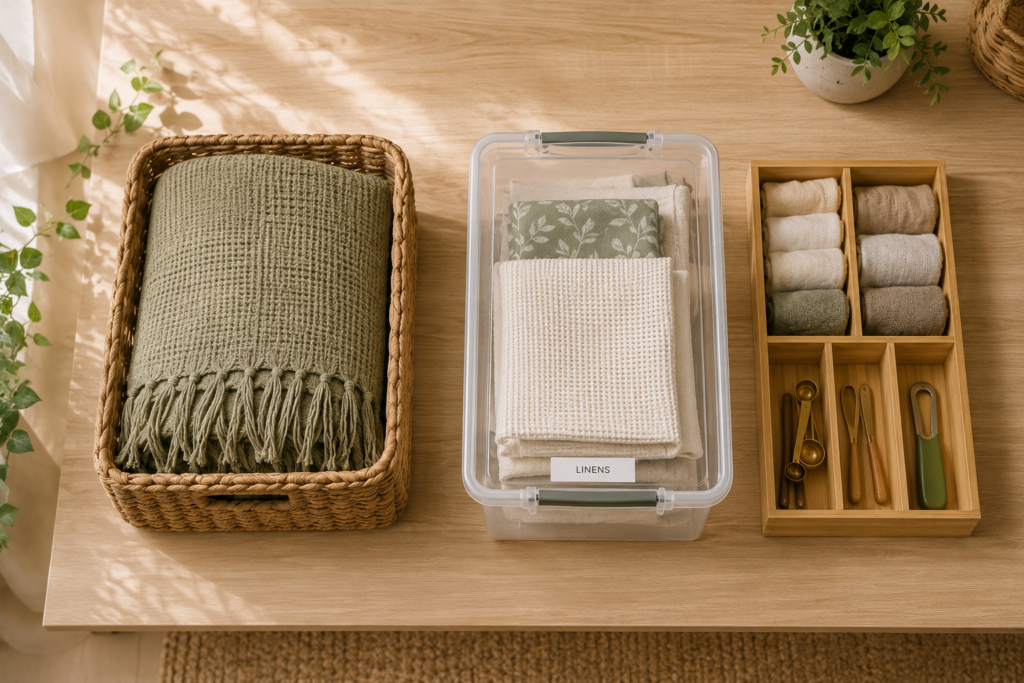
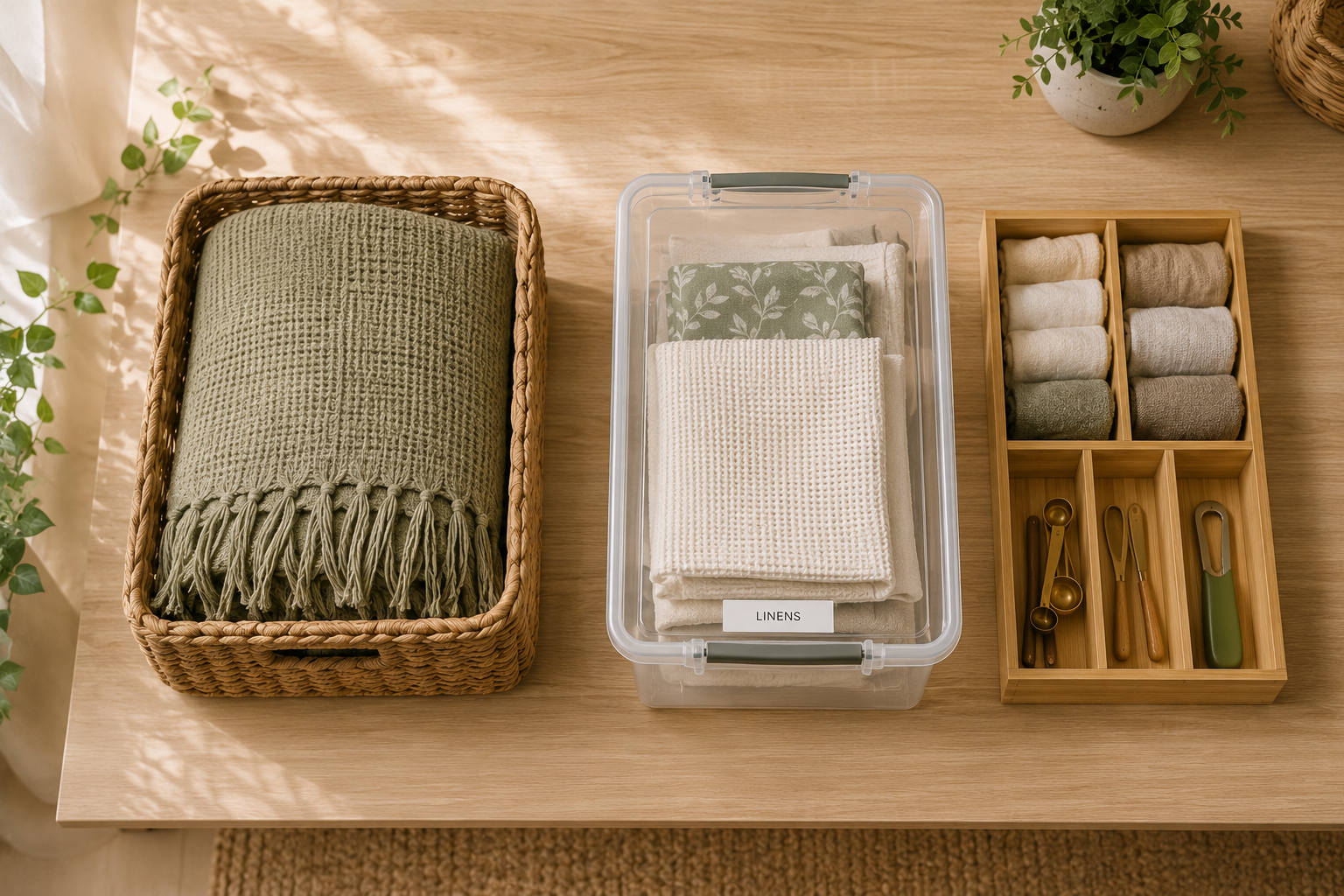
We buy storage solutions to solve a clutter problem and end up making it worse. More baskets means more space to fill. More bins means more places to hide things we should have let go of. The storage industry has a vested interest in making you think you need more containers — but containers don’t reduce what you own, they just relocate it.
If your home feels cluttered, buying more organization products will almost never fix it permanently. Things will look better temporarily, then slowly fill back up to the same level of overwhelm.
Buy the bin after you’ve decluttered. Not before. The pantry organization system I wrote shows this in action — the organizing step came last, after removing about half of what was in there.
What Actually Fixes the Feeling
The only thing that reliably makes a home feel lighter is owning less. Not minimalism — you don’t need white walls and three possessions. Just less than you have now. Specifically, less of the things you don’t use, don’t love, and wouldn’t buy again.
Start with one category: the kitchen counter, the bathroom cabinet, the bedroom chair. Remove everything. Put back only what you actually use in that space. See how it feels.
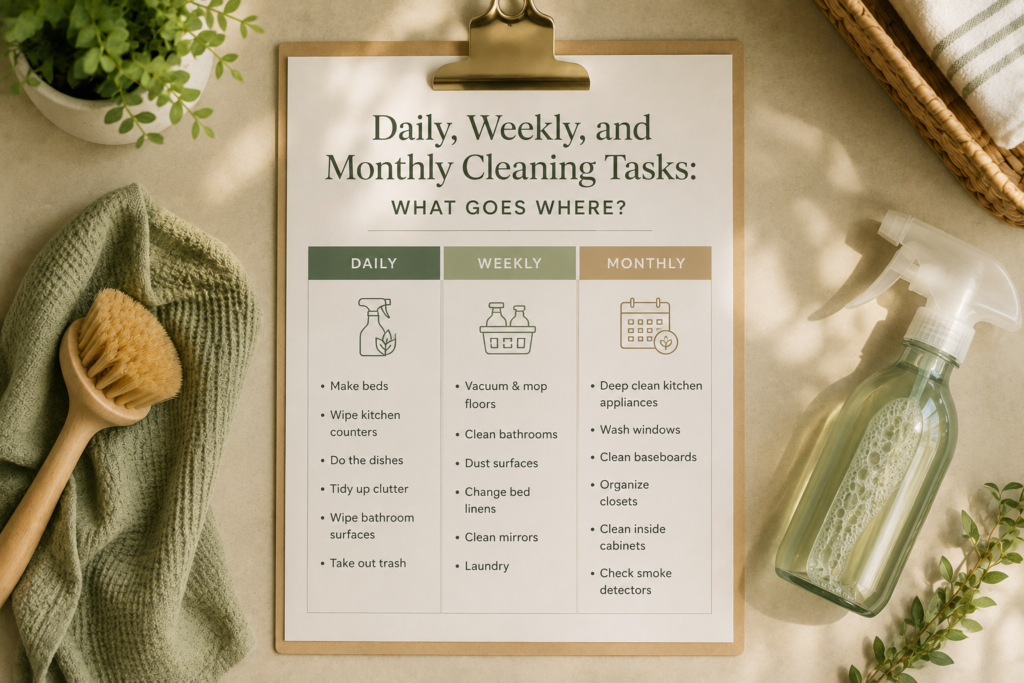
Most people who do this never go back. Not because they became minimalists, but because they remember what it felt like to have a surface that stayed clear. Pair this with a consistent daily cleaning routine and the whole thing starts maintaining itself — because there’s less to maintain.
Real talk: Your home doesn’t feel cluttered because you’re bad at cleaning. It feels cluttered because it has too many things in it. Cleaning maintains the clutter. Decluttering removes it. Those are different jobs, and only one of them changes how the room feels.
Pick one spot today. Not the whole house — one drawer, one shelf, one flat surface. Remove everything. Put back only what earns its place. Live with it for a week and notice how that one cleared corner changes the feeling of the whole room.
Frequently Asked Questions
Why does my house feel cluttered even when it’s clean?
Because cleaning and decluttering are different things. Cleaning maintains what you have. Decluttering reduces how much you have. A clean home with too much in it still feels cluttered — the visual weight doesn’t disappear just because surfaces are wiped.
What is the difference between cleaning and decluttering?
Cleaning removes dirt, dust, and grime. Decluttering removes excess possessions. Both are necessary, but only decluttering changes how spacious and calm a room feels. Clean first, declutter second, then clean again — in that order.
How do I start decluttering when I feel overwhelmed?
Start with one flat surface — a counter, a nightstand, a shelf. Remove everything. Put back only the things you use daily. This gives you an immediate, visible result without committing to a whole-house project.
Why do I keep buying storage solutions that don’t help?
Because storage solutions organize clutter — they don’t reduce it. More bins means more space to fill. The real fix is owning fewer things that need storing. Buy organizational products after you’ve decluttered, not as a substitute for it.
What is visual clutter and why does it feel tiring?
Visual clutter is anything your eye has to process — too many colors, patterns, objects, or surfaces covered in things. Your brain registers all of it as information and works to process it, which is why a visually busy room feels exhausting even when it’s technically tidy.
How do I know what to get rid of?
Ask three questions: Do I use this? Do I love this? Would I buy it again today? If the answer to all three is no, it goes. The “just in case” test: have you needed it in the last year? If not, the case hasn’t come up.
How do I stop clutter from coming back?
The one-in-one-out rule is the simplest system — when something new comes in, something goes out. Combined with a weekly 10-minute tidy and a genuine pause before buying anything new, most people find their homes stay lighter without a lot of effort.
What rooms should I declutter first?
Start with the room you spend the most time in — usually the kitchen or living room. The impact is immediate and visible, which makes it easier to keep going. Bedrooms and closets come second. Garage and storage last.